
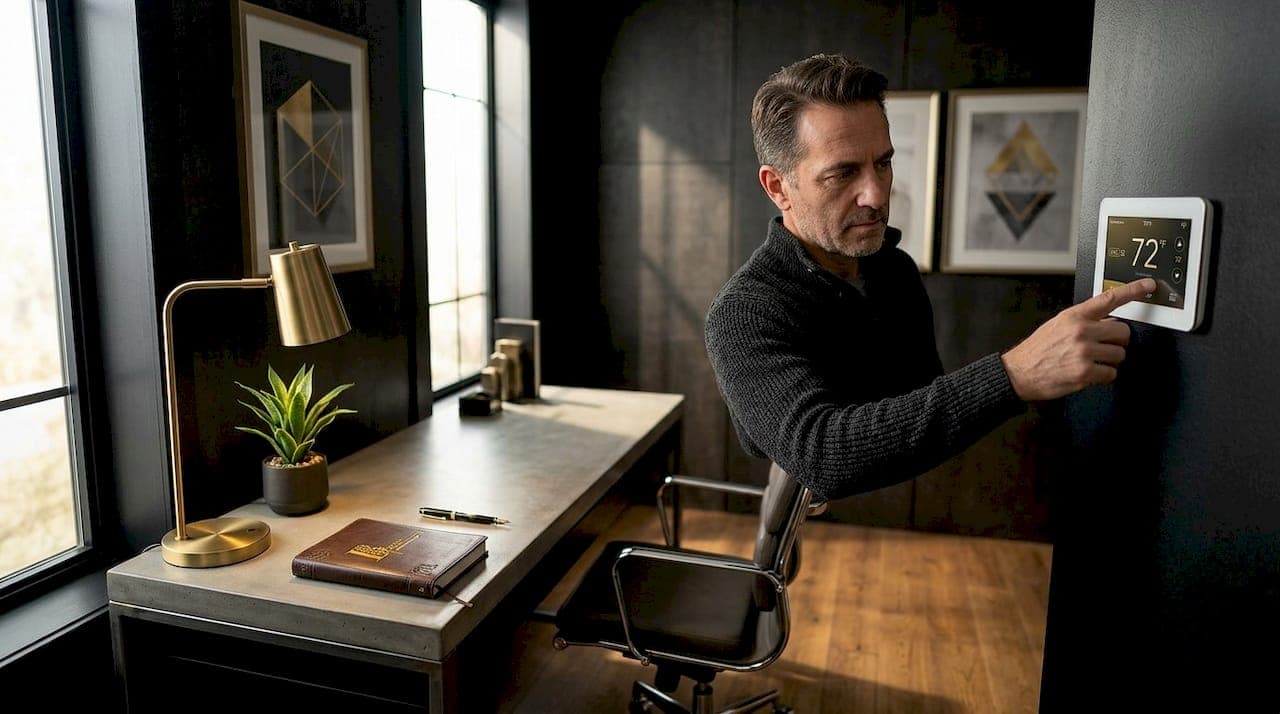
HVAC zoning is defined as the practice of dividing a home or building into distinct thermal zones, each controlled by its own thermostat and motorized dampers that regulate airflow independently. Rather than conditioning every room to the same temperature at the same time, a zoned HVAC system targets only the spaces that need heating or cooling at any given moment. The U.S. Department of Energy reports that properly designed zoning can reduce energy costs by up to 30%, and brands like Trane and iO HVAC Controls have built entire product lines around making that possible. For homeowners dealing with hot upstairs bedrooms, cold home offices, or constant thermostat battles, zoning is the most direct technical solution available.
How does HVAC zoning work?
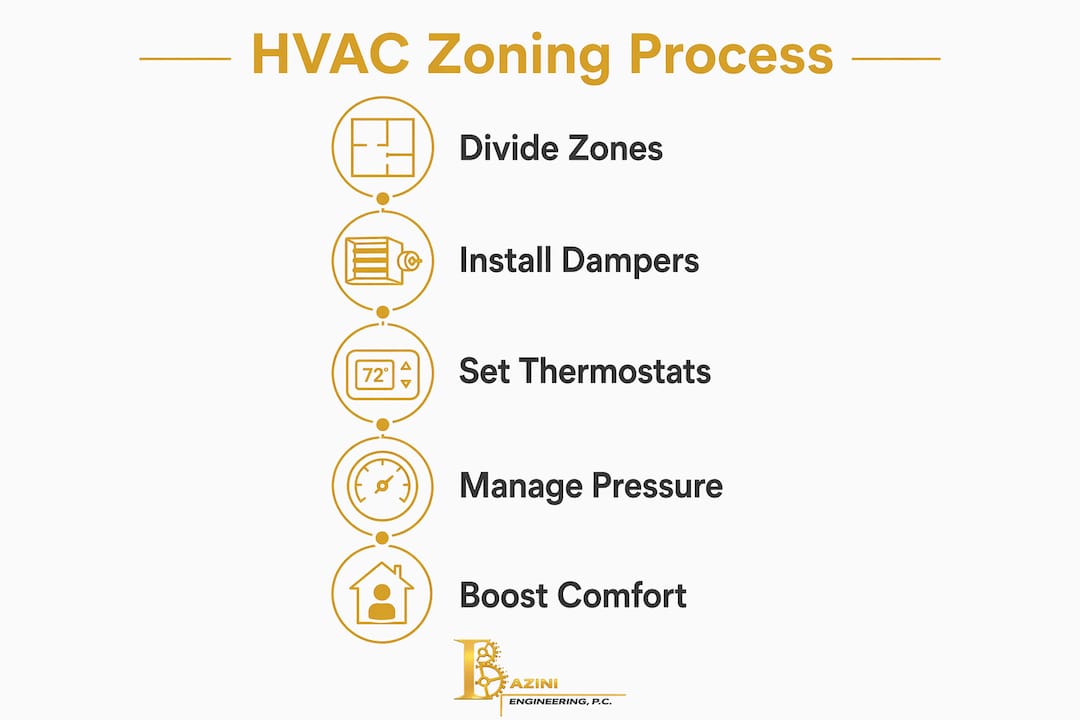
An HVAC zoning system operates through three core components working in coordination: individual zone thermostats, motorized dampers inside the ductwork, and a central zone control panel. Each thermostat monitors temperature in its assigned area and sends a call for heating or cooling to the control panel. The panel then opens the motorized dampers serving that zone while keeping others closed or partially open, directing conditioned air exactly where it is needed.
The role of motorized dampers
Motorized dampers are the physical mechanism that makes zoning possible. Installed inside duct branches, they open or close based on signals from the zone controller, modulating airflow to each section of the building. When only one zone calls for conditioning, the dampers serving inactive zones restrict airflow, which concentrates the system's output where it is actually needed.
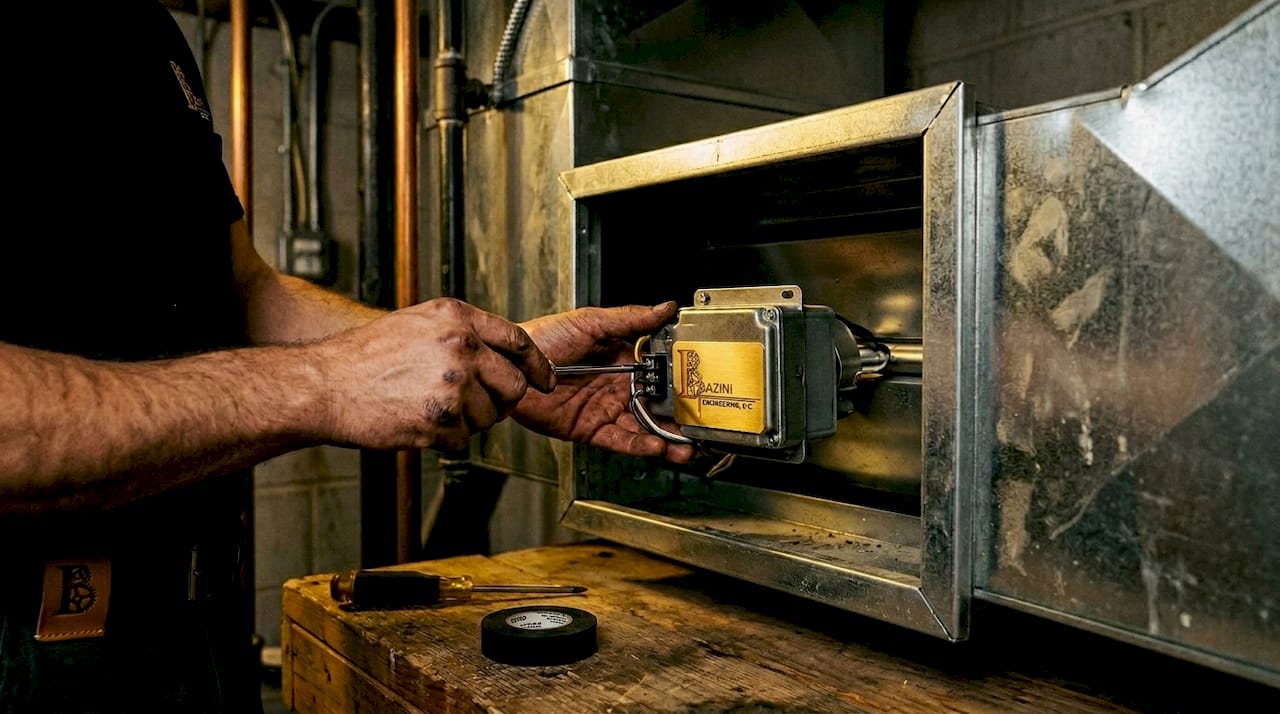
This airflow concentration creates a technical challenge worth understanding. When fewer zones are open, duct static pressure rises because the same volume of air is being pushed through a smaller network of open ducts. Without a pressure management strategy, this spike can cause noise, reduce equipment efficiency, and shorten system life.
Pressure management strategies
iO HVAC Controls outlines four main approaches to managing static pressure in zoned systems:
- Minimum-open dampers: Zone dampers never fully close, maintaining a baseline airflow path at all times.
- Staged output: The HVAC equipment runs at reduced capacity during small-zone calls, matching output to the available duct volume.
- Relief zones: A dedicated bypass duct or relief damper bleeds excess pressure back to the return side.
- ESP technology: Devices like the iO HVAC Controls ZP3-ESP use real-time static pressure monitoring to automatically modulate non-calling zone dampers, relieving pressure without a separate bypass duct.
Pro Tip: If you are retrofitting zoning into an existing system, ask your contractor specifically which pressure strategy they plan to use. A system installed without any pressure management will likely develop noise problems or equipment faults within the first heating season.
Dynamic airflow redistribution also requires staged HVAC equipment control and conflict resolution logic for effective multi-zone operation, which is why matching the control panel to your specific equipment type matters as much as the damper selection itself.
What are the real benefits of HVAC zoning?
HVAC zoning primarily improves comfort by resolving conflicting thermostat demands rather than changing the system's total capacity. That distinction matters. Zoning does not make your equipment more powerful. It makes the power you already have go exactly where it is needed, when it is needed.
The most immediate benefit most homeowners notice is the elimination of hot and cold spots. Multi-story homes are a classic example: heat rises, so upper floors routinely run 5 to 10 degrees warmer than lower floors under a single-thermostat setup. Rooms with large south-facing windows gain solar heat load that the rest of the house does not share. Spaces with high ceilings trap warm air far above occupant level. Zoning addresses each of these conditions independently instead of forcing a single setpoint to serve all of them.
The energy savings case is equally concrete. Targeted conditioning reduces energy costs by up to 30% because unoccupied zones are not conditioned unnecessarily. A family that spends evenings in the living room and bedrooms does not need to heat or cool the home office, guest room, or basement to the same standard. Over a full heating and cooling season, that selective operation adds up to real dollar savings on utility bills.
Additional benefits include:
- Reduced thermostat conflicts in homes with multiple occupants who have different comfort preferences.
- Lower system runtime because the equipment cycles less frequently when it is only conditioning a portion of the building.
- Longer equipment life tied to reduced runtime and more consistent operating conditions.
- Better humidity control in specific zones, particularly useful in finished basements or sunrooms.
Zoning works best in larger homes, multi-level buildings, and spaces with uneven heat gain or loss due to layout or sun exposure. It delivers noticeably less benefit in small, well-balanced houses where a single thermostat already maintains consistent temperatures throughout.
Common challenges when installing HVAC zoning
The biggest risk with zoning is airflow instability caused by duct pressure spikes, and planning a pressure strategy before installation is not optional. It is the difference between a system that works well for years and one that generates service calls within months.
Static pressure and duct design
When a small zone calls for conditioning and the rest of the dampers close, the system pushes its full airflow through a fraction of the duct network. Duct static pressure spikes during these moments can cause audible noise, trigger equipment safety shutoffs, or cause physical stress on duct seams over time. Proper commissioning must test the worst-case scenario: the smallest zone calling alone, with all others closed.
Key technical considerations
- Equipment compatibility: Not all thermostats and zone panels work with every HVAC equipment type. Heat pumps, variable-speed systems, and two-stage furnaces each require specific control logic. Mismatched controls are a leading cause of zoning failures.
- Transformer sizing: Zoning controls add electrical load that requires appropriately sized transformers and wiring. Undersized transformers cause weak damper movement and control instability, both of which are difficult to diagnose after installation.
- Duct design quality: Zoning cannot fix a poorly designed duct system. Undersized ducts, excessive duct runs, or leaky connections will amplify pressure problems rather than resolve them.
- Oversized equipment: An oversized HVAC unit short-cycles under normal conditions. Add zoning to an oversized system and the short-cycling becomes more frequent and more damaging.
Pro Tip: Remote temperature sensors placed in problematic rooms give the zone controller a more accurate read of actual occupant comfort than a fixed wall thermostat alone. This is especially useful in rooms with large windows or high ceilings where wall temperature and air temperature diverge significantly.
| Challenge | Risk | Solution |
|---|---|---|
| Static pressure spikes | Noise, equipment damage | ESP technology or minimum-open dampers |
| Transformer undersizing | Weak dampers, control faults | Size transformer to total damper load |
| Equipment mismatch | Control failures | Match panel to equipment type before purchase |
| Poor duct design | Amplified pressure issues | Audit and seal ducts before zoning retrofit |
| Oversized HVAC unit | Excessive short-cycling | Address sizing before adding zones |
The iO HVAC Controls ZP3-ESP addresses several of these challenges simultaneously by using real-time pressure monitoring to modulate dampers automatically, replacing the traditional bypass damper with a smarter, cleaner solution. For retrofits especially, this kind of integrated pressure management reduces both installation complexity and long-term service risk.
Is HVAC zoning worth the cost for your home?
Retrofit zoning installations typically cost between $2,000 and $4,500 for existing homes. Adding zoning during a new HVAC installation generally runs $1,500 to $3,000 because duct access is easier and the equipment is already being configured. The spread within those ranges depends on the number of zones, the number of dampers required, duct accessibility, and whether the existing equipment is compatible with zone controls.
When zoning makes financial sense
Zoning delivers the strongest return on investment in these scenarios:
- Homes larger than 2,000 square feet with multiple floors.
- Buildings where specific rooms consistently run too hot or too cold.
- Homes with finished basements, sunrooms, or additions that have different thermal loads than the main structure.
- Properties where multiple occupants have consistently different temperature preferences.
- Buildings where energy bills are high relative to the square footage being conditioned.
When zoning is not the right answer
Zoning is not a fix for every comfort problem. Small homes under 1,200 square feet with well-balanced duct systems rarely see enough benefit to justify the cost. Homes with poor insulation or significant air leakage will not see meaningful energy savings from zoning because the thermal envelope loses conditioned air faster than zoning can compensate. An oversized HVAC system needs to be addressed before zoning is added, not after.
Comparing zoning to installing a second HVAC system is worth doing for larger homes. A second system provides complete redundancy and independent control but costs significantly more upfront and adds ongoing maintenance obligations. Zoning a single system is almost always the more cost-effective path when the existing equipment is properly sized and the duct system is in good condition. A professional zoning evaluation from a licensed mechanical engineer will identify which path fits your specific building before you commit to either.
Key takeaways
HVAC zoning works best when the underlying equipment is properly sized, the duct system is well-designed, and a pressure management strategy is built into the installation from the start.
| Point | Details |
|---|---|
| Core function | Zoning divides a building into independently controlled thermal zones using dampers and thermostats. |
| Energy savings | Properly designed zoning can reduce energy costs by up to 30% through targeted conditioning. |
| Pressure management | Static pressure spikes during small-zone calls require a deliberate strategy such as ESP technology or staged output. |
| Cost range | Retrofit installations run $2,000 to $4,500; new installations typically cost $1,500 to $3,000. |
| Best fit | Zoning delivers the most value in larger, multi-story homes with uneven temperature distribution. |
What I've learned from years of zoning evaluations
The homeowners who get the most out of HVAC zoning are the ones who treat it as a precision tool, not a cure-all. I have reviewed projects where zoning was installed in homes with undersized ducts, oversized equipment, and no pressure strategy. Every one of those projects generated callbacks. The zoning hardware itself was fine. The surrounding system was not ready for it.
The most common misconception I encounter is that zoning will compensate for poor insulation or an oversized unit. It will not. Zoning controls where conditioned air goes. It does not change how much air leaks out of the building envelope or how aggressively an oversized compressor short-cycles. Fix those problems first, then add zoning.
What I find genuinely impressive about modern solutions like the iO HVAC Controls ZP3-ESP is that they remove one of the historically weakest links in zoning installations: the bypass damper. Traditional bypass dampers relieve pressure but can mask underlying sizing problems and create their own airflow inefficiencies. ESP-based panels handle pressure dynamically and give installers real diagnostic feedback during commissioning. That is a meaningful improvement for anyone doing a retrofit in an older home with imperfect ductwork.
My practical advice: get a load calculation and duct audit done before any zoning conversation. If those check out, zoning is worth serious consideration. If they do not, address them first. The investment in sustainable MEP design principles pays off in every system that gets built on top of it.
— Joseph
Get professional HVAC zoning guidance from Bazini Engineering

Bazini Engineering has designed and consulted on HVAC systems across New York City, Long Island, Westchester County, and beyond since 2010. If you are weighing whether zoning makes sense for your home or commercial property, the right starting point is a professional mechanical engineering evaluation, not a contractor estimate based on square footage alone. Baziniengineering provides MEP engineering services that include full HVAC zoning design, load calculations, duct system analysis, and energy code compliance review. Whether you are retrofitting an existing system or planning a new installation, Bazini Engineering delivers code-compliant designs built around your building's actual thermal needs, not generic assumptions.
FAQ
What is HVAC zoning in simple terms?
HVAC zoning is a system that divides a home into separate temperature-controlled areas, each with its own thermostat and motorized dampers, so you can heat or cool specific rooms without conditioning the entire building at once.
How much does an HVAC zoning system cost?
Retrofit zoning installations typically cost between $2,000 and $4,500, while adding zoning during a new HVAC installation usually runs $1,500 to $3,000, depending on the number of zones and duct accessibility.
Can HVAC zoning fix uneven temperatures in my home?
Yes. Zoning directly addresses hot and cold spots by targeting conditioning to specific areas, which is particularly effective in multi-story homes, rooms with large windows, and spaces with high ceilings.
What is the biggest risk with HVAC zoning?
The primary risk is duct static pressure spikes when only a small zone is calling for conditioning. Without a pressure management strategy such as ESP technology or staged equipment output, these spikes can cause noise, equipment damage, or comfort failures.
Is HVAC zoning worth it for a small home?
Zoning delivers limited benefit in small homes under 1,200 square feet with well-balanced duct systems. It is most cost-effective in larger, multi-level homes where temperature imbalances are significant and consistent.