
An electrical load calculation totals the expected electrical demand in your home, measured in volt-amperes (VA) or watts, then converts that number to amps to determine whether your panel can handle it. It's the math that decides if your service is big enough for a new range, an EV charger, or a whole-home remodel.
For a quick DIY estimate, you can add up your major circuits yourself. But if you're pulling a permit, adding a large load, or seeing repeated breaker trips, hire a licensed electrician or engineer.
- DIY-friendly: Checking headroom before buying a small appliance
- Hire a pro: Permit-required work, panel upgrades, additions
- Professionals size services under NEC Article 220; HVAC contractors size equipment under ACCA Manual J
- The 80% continuous-load guideline determines how close you can safely run a breaker to its rating
Key Takeaways
An accurate electrical load calculation converts total home demand into amps using NEC Article 220 methods, and it's the deciding factor in safe, code-compliant service sizing.
| Point | Details |
|---|---|
| Core formula | Amps = VA ÷ Volts; use 240 V for whole-house single-phase calculations. |
| DIY method has limits | The 3 VA/ft² plus 1,500 VA per circuit approach is a rough check, not a permit-ready calculation. |
| Watch the 80% rule | Keep continuous loads under 80% of your panel's main breaker rating. |
| NEC and Manual J solve different problems | Article 220 sizes electrical service; ACCA Manual J sizes HVAC equipment. |
| Bazini Engineering delivers stamped calculations | The firm provides NEC-compliant load calculations and Manual J coordination for permit-ready projects. |
Table of Contents
- What Is an Electrical Load, and How Do You Measure It?
- Why Load Calculations Matter for Home Safety and Budget
- How to Estimate Your Home's Electrical Load Yourself
- NEC Article 220 vs. ACCA Manual J: What Pros Actually Use
- A Worked Example: Sizing a 1,500 Sq Ft House
- Converting VA to Amps and Checking Your Panel
- Common High-Draw Appliances and Their Nameplate Ratings
- When to Call a Licensed Electrician or Engineer
- The Engineering Case for Getting Load Calculations Right
- Why Accurate Numbers Beat Rules of Thumb
- Get a Code-Ready Load Calculation From Bazini Engineering
- Where to Learn More
- Frequently Asked Questions
- Sources
What Is an Electrical Load, and How Do You Measure It?
Electrical load is simply the amount of power your circuits and appliances draw when running. Electricians express it in VA (volt-amperes) or watts, then convert to amps because that's what breakers and wire ratings are actually sized in.
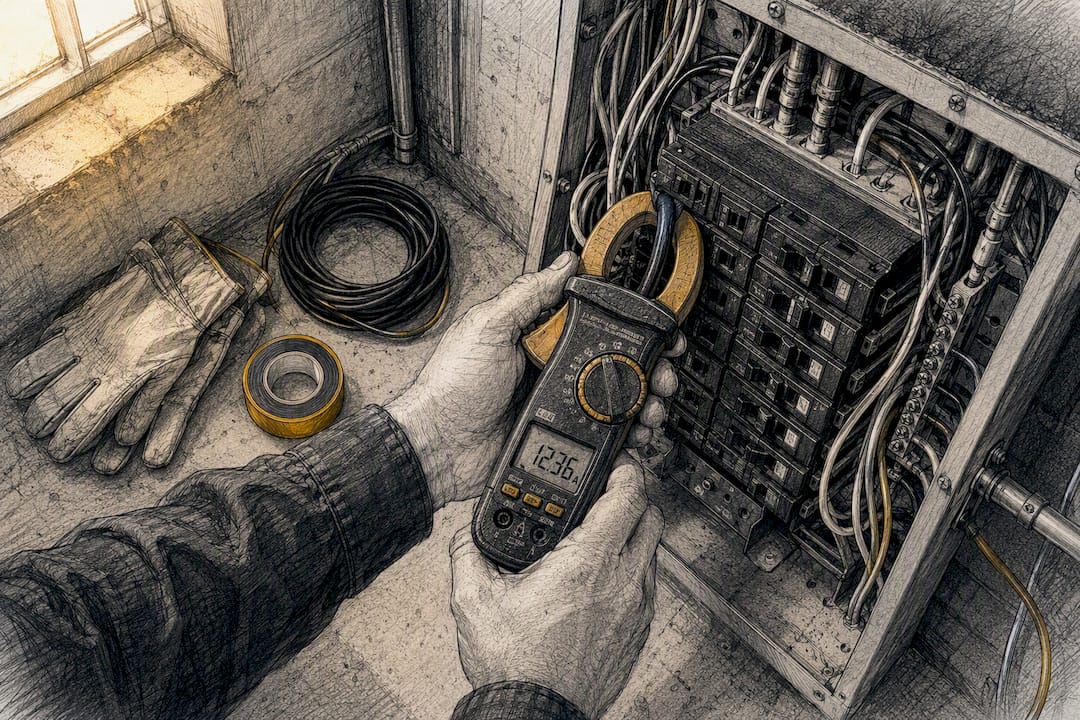
There's a difference between connected load (every appliance's nameplate rating added together) and demand load (a more realistic number that accounts for the fact you're not running everything at once). Code calculations lean on demand load, which is why your panel doesn't need to handle the sum of every appliance in your house simultaneously.
The core formula is: Amps = VA ÷ Volts.
- A 1,800 VA load on a 120 V circuit draws 15 amps
- A 9,600 VA load on a 240 V circuit draws 40 amps
Quick fact: A 48,000 VA calculated load on a standard 240 V single-phase home service works out to almost exactly 200 amps, which is why 200 A service has become the default for larger modern houses.
Why Load Calculations Matter for Home Safety and Budget
Get this math wrong and the consequences aren't abstract. An undersized calculation can lead to overloaded conductors, which raises fire risk, along with breakers that trip constantly, which is your panel's way of shouting that it's out of headroom. Go too conservative in the other direction and you're paying for a panel upgrade you didn't actually need.
- Nuisance breaker trips signal a circuit running near or past its limit
- Undersized wiring is a documented fire risk in older or upgraded electrical systems
- Oversizing wastes money on equipment and labor you don't need
- Permits and inspections typically require a proper calculation on file
Demand factors exist because not every appliance runs at full tilt at the same moment. Your dryer, oven, and AC rarely peak together, so code lets you apply reduction percentages instead of adding raw nameplate numbers.
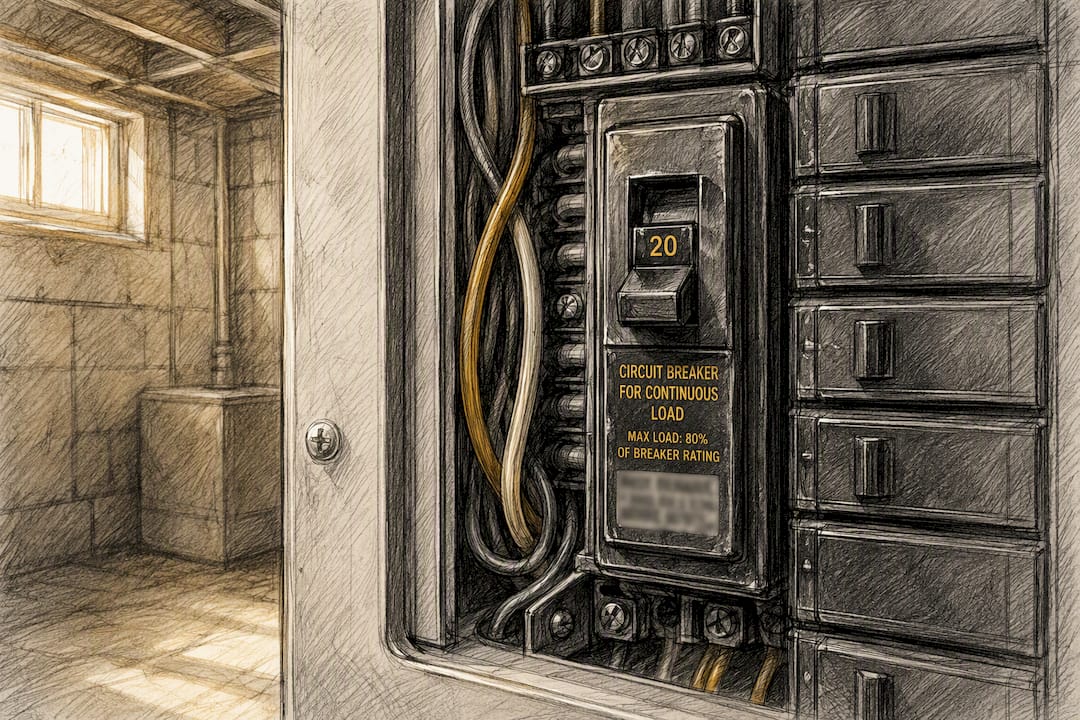
Pro Tip: When sizing anything that runs continuously for three hours or more (like an EV charger or a heat pump), keep it under 80% of the breaker's rating, and always pull the actual nameplate figures rather than guessing.
How to Estimate Your Home's Electrical Load Yourself
Here's a homeowner-safe method for a rough estimate. It won't replace a stamped, code-compliant calculation, but it will tell you whether you're in the ballpark before you call anyone.
- Measure your habitable square footage and multiply by 3 VA per square foot for general lighting and receptacles.
- Add 1,500 VA for each small-appliance circuit (kitchen counters typically require two) and another 1,500 VA for the laundry circuit.
- Add nameplate VA for fixed appliances like the range, dryer, water heater, and dishwasher.
- Include only the larger of your heating or cooling load, not both, since they never run simultaneously.
- Apply standard demand factors to the general lighting/receptacle total, then convert the final VA sum to amps.
Reading a nameplate is straightforward once you know what to look for:
- If it lists watts, that's your VA figure for estimating purposes
- If it only lists amps, multiply amps by the voltage (120 or 240) to get VA
- Look for "RLA" (running load amps) versus "LRA" (locked rotor amps) on motor-driven appliances; use running amps for steady-state load
A word of caution: this square-footage approach is a conservative approximation, useful for sanity-checking your panel before a purchase. Licensed electricians sometimes qualify for the NEC's optional method, which groups loads differently and can land on a smaller required service than the standard method. That's a judgment call for a professional, not a DIY shortcut.
NEC Article 220 vs. ACCA Manual J: What Pros Actually Use
Electricians and HVAC designers don't use the same rulebook, and knowing the difference helps you ask for the right document.
- NEC Article 220 governs electrical service sizing. It offers a standard method (separate demand factors applied line by line) and an optional method (220.82, which groups general loads and often yields a smaller service when a home qualifies).
- ACCA Manual J (MJ8) is the industry standard for HVAC heating and cooling loads. It calculates conduction, infiltration, ventilation, and both sensible and latent cooling gains, which nameplate math can't touch.
- Ask for NEC Article 220 when you're sizing or upgrading electrical service and pulling a permit.
- Ask for Manual J when you're replacing or sizing a furnace, heat pump, or AC system.
They solve different problems and often get confused, but a remodel that touches both electrical and HVAC needs both documents on file.
A Worked Example: Sizing a 1,500 Sq Ft House
Here's the math for a typical single-family home, using the homeowner approximation method:
- General lighting: 1,500 sq ft × 3 VA/ft² = 4,500 VA
- Two small-appliance circuits: 2 × 1,500 VA = 3,000 VA
- Laundry circuit: 1,500 VA
- Electric range (nameplate): 8,000 VA
- Dryer (nameplate): 5,000 VA
- Water heater (nameplate): 4,500 VA
- Cooling load (larger than heating in this case): 4,800 VA
Adding these gives roughly 31,300 VA of connected load. Once you factor in NEC demand factors for lighting and appliances, a realistic calculated load lands closer to 22,000 to 24,000 VA for this size home.
- Take the demand-adjusted total, roughly 23,000 VA
- Divide by 240 V: 23,000 ÷ 240 ≈ 96 amps
That result comfortably fits inside a 100 A service, though many builders default to 150 A or 200 A to leave room for future additions like an EV charger or a hot tub.
Converting VA to Amps and Checking Your Panel
The formula never changes: Amps = VA ÷ Volts, using 240 V for whole-house, single-phase calculations. A 30,000 VA calculated load divided by 240 V comes out to 125 amps.
Once you have that number, compare it to your panel's main breaker rating, not your total number of breaker slots, which tells you nothing about capacity.
- Find the amperage stamped on the main breaker (commonly 100, 150, or 200 A)
- Apply the 80% rule: don't plan continuous loads above 80% of that rating
- A 200 A panel has roughly 160 A of comfortable continuous headroom
Quick check: If your calculated load exceeds 80% of your panel's rating, it's time to talk to an electrician about a panel upgrade or load-management strategies before adding anything new.
Common High-Draw Appliances and Their Nameplate Ratings
A handful of appliances drive most residential service sizing decisions, and they're worth knowing by name:
- Electric range or cooktop
- Clothes dryer (electric)
- Water heater (electric)
- EV charger (Level 2 units often draw 30 to 50 amps)
- Heat pump or central air conditioner
- Well pump
- Microwave (built-in units draw more than countertop models)
If a nameplate lists only amps, multiply by the listed voltage to get VA, and check your appliance's spec sheet for starting versus running current on anything with a motor. Motors briefly draw far more on startup than during steady operation.
When to Call a Licensed Electrician or Engineer
Some situations move past DIY estimating entirely. If you're planning a major remodel, adding an EV charger or electric range, dealing with frequent breaker trips, or facing a permit submittal, get a professional calculation.
- Panel or service upgrades requiring inspection sign-off
- Multi-family buildings or properties with complex electrical distribution
- Any project where nameplate data is missing, damaged, or unreadable
Ask for a NEC-compliant load calculation, a service sizing report, and a single-line diagram as permit-ready documentation. An electrician's field assessment and a stamped engineering calculation aren't interchangeable. The latter is what most jurisdictions require for larger commercial or complex residential projects, and it typically costs more precisely because it carries legal weight with the building department.
The Engineering Case for Getting Load Calculations Right
Accurate load calculations aren't just a compliance checkbox. They're the starting point for the entire Manual J to Manual S to Manual D workflow that determines equipment sizing and ductwork.
- Oversized HVAC equipment cycles on and off too often, wasting energy and shortening equipment life
- Undersized equipment struggles on peak days and never delivers the comfort you paid for
- The same logic applies to electrical service: undersizing risks safety, oversizing wastes capital
Professionals lean on NEC Article 220 for electrical sizing and ACCA MJ8 for HVAC precisely because guesswork in either direction has real costs down the line.
Why Accurate Numbers Beat Rules of Thumb
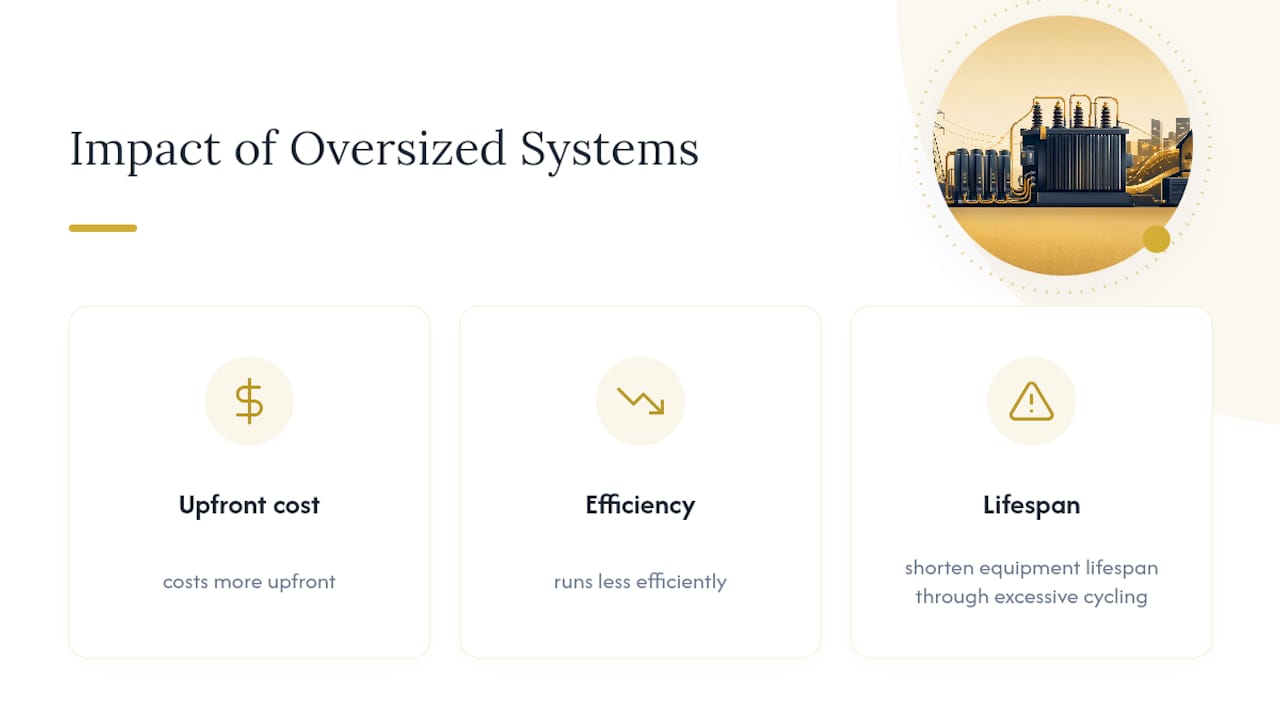
Homeowners often assume bigger is always safer when it comes to electrical service or HVAC equipment. It isn't. An oversized system doesn't just cost more upfront, it runs less efficiently and can actually shorten equipment lifespan through excessive cycling.
At Bazini Engineering, P.C., our approach centers on getting the numbers right the first time, drawing on our expertise to show how precise calculations translate into real savings for clients. Bazini Engineering is licensed in New York and Florida and delivers code-compliant, project-ready load calculations for homeowners and property managers alike.
Get a Code-Ready Load Calculation From Bazini Engineering
A square-footage estimate tells you where you stand. It won't get you a permit, and it won't tell an inspector or your utility that your new EV charger or range is safe to install. Bazini Engineering closes that gap with NEC-compliant electrical load calculations, ACCA Manual J coordination for HVAC sizing, and permit-ready documentation stamped by a licensed engineer.

Our scope covers the full picture: electrical service sizing, mechanical and HVAC load coordination, plumbing layouts for larger remodels, and support navigating filings with agencies like the NYC Department of Buildings. If you're planning a remodel, adding a major appliance, or just tired of guessing whether your panel can handle it, request a mechanical engineering consultation and get a calculation you can actually submit.
Where to Learn More
For deeper reading on the standards mentioned here, ask your electrician or inspector about NEC Article 220's demand-factor tables and ACCA Manual J (ACCA MJ8) for HVAC sizing specifics.
- Bazini Engineering's mechanical services for HVAC load coordination
- Bazini Engineering's full service overview for MEP and permitting support
- Plumbing engineering services for remodels involving multiple systems
Request a code-ready calculation before you commit to a panel upgrade or new appliance purchase.
Frequently Asked Questions
What is an electrical load calculation used for? It determines the minimum amperage your electrical service needs to safely handle your home's connected appliances and circuits, which is required for permits and panel upgrades.
How do I calculate electrical load for my house without an electrician? Multiply your habitable square footage by 3 VA per square foot, add 1,500 VA for each small-appliance and laundry circuit, then add nameplate VA for major appliances and the larger of your heating or cooling load.
What's the difference between NEC Article 220 and ACCA Manual J? NEC Article 220 sizes your electrical service for permitting and safety. ACCA Manual J sizes HVAC heating and cooling equipment based on your home's actual thermal characteristics.
What does the 80% rule mean for my breaker panel? Continuous loads, like EV chargers or heat pumps running for three or more hours, should stay under 80% of your panel's main breaker rating to avoid nuisance trips and overheating.
When should I hire a professional instead of doing it myself? Hire a licensed electrician or engineer for permit submittals, major remodels, new EV chargers or ranges, frequent breaker trips, or any situation involving unclear nameplate data.