

Install ASSE 1010-listed arrestors within six pipe diameters of every quick-closing valve, then bring your static pressure into a safe range with a pressure-reducing valve or thermal expansion tank, and secure any loose piping. That's the complete fix. Draining pipes, adding pipe straps, and screwing on mini-arrestors are jobs most homeowners can handle themselves; installing arrestors inside finished walls or sizing a whole-house PRV usually calls for a licensed plumber or engineer.
TL;DR:
- Installing arrestors within six pipe diameters of quick-closing valves is essential to meet code and effectively reduce water hammer risks.
- High static pressure above 80 psi increases hammer severity, requiring pressure reduction and possibly installation of thermal expansion tanks.
- Draining and refilling air chambers or adding mini-arrestors can solve most DIY water hammer issues, but ongoing problems or concealed piping may need a licensed plumber.
- Proper sizing based on fixture units and pressure, as well as correct placement, are critical to prevent arrestors from failing or returning hammering noise.
- Persistent water hammer or in-wall piping problems often require professional inspection, pressure adjustments, and possibly permits for accurate, long-lasting fixes.
Table of Contents
- What's Actually Causing the Banging in Your Pipes?
- Quick DIY Fixes You Can Try Today
- Water Hammer Arrestors: Types, Sizing, and Where Code Requires Them
- Is Your Water Pressure Making Water Hammer Worse?
- When to Call a Plumber Instead of Fixing It Yourself
- An Engineering Firm's Take on Getting This Right the First Time
- Get a Code-Compliant Fix from Bazini Engineering
- Sources
What's Actually Causing the Banging in Your Pipes?
Water hammer happens when a valve slams shut and stops a moving column of water almost instantly. That momentum has nowhere to go, so it turns into a pressure spike that can hit multiple times your normal system pressure in a fraction of a second. Repeated often enough, that shock loosens joints, stresses fittings, and shortens the life of your appliances.
Before you fix anything, confirm what's triggering it:
- Listen and log. Run one fixture at a time (dishwasher, washing machine, an irrigation zone, a single faucet) and note exactly which one produces the bang and when.
- Watch for the usual suspects. Washing machine solenoid valves, dishwashers, and irrigation controllers all snap shut fast, and they're the most common triggers in residential systems.
- Try the drain-to-recharge test. Shut off your main, open the highest faucet in the house, then the lowest, and let the system drain completely before refilling. If the noise disappears for a while, your air chambers had waterlogged and you just confirmed the diagnosis.
- Check your static pressure. Screw a pressure gauge onto an outdoor spigot with everything else off. High readings point toward a pressure problem rather than (or in addition to) a valve problem, and if you have a check valve or backflow preventer, thermal expansion could be part of the story too.
Quick DIY Fixes You Can Try Today
Before you touch a wrench, know that most water hammer complaints get resolved with fixes that cost less than a trip to the hardware store's power tool aisle. Here's where to start:
- Drain and refill first. This restores the trapped air pockets in your pipe chambers that cushion the shock, and it's the same fix plumbers try before anything else.
- Strap loose pipes properly. Banging is sometimes just pipes knocking against studs or joists. Use copper-rated straps on copper lines, since steel hangers against copper cause galvanic corrosion over time.
- Wrap exposed runs in foam pipe insulation. It won't stop hydraulic shock on its own, but it deadens the impact noise where pipes contact framing.
- Swap fast-close valves where you can. Quarter-turn ball valves and solenoid valves close almost instantly. A slow-close replacement, where the fixture allows it, softens the surge at the source.
- Install screw-on mini-arrestors. These thread onto an exposed supply line, usually right behind a washing machine or under a sink, and act as a small cushion of compressible gas.
Pro Tip: Drain your air chambers every six months to a year, even if the noise hasn't come back. Air chambers waterlog gradually, and refilling them before they fail completely keeps the fix working instead of letting the problem sneak back in.
Water Hammer Arrestors: Types, Sizing, and Where Code Requires Them
A capped pipe stub, the old-school "air chamber," waterlogs over time as the trapped air slowly dissolves into the water. Once that happens, it stops absorbing anything. Mechanical arrestors solve that problem with a sealed piston or bellows that keeps its gas charge permanently, which is why the 2024 International Residential Code requires ASSE 1010-listed arrestors at quick-closing valves and no longer accepts a plain air chamber as compliant.
Placement matters as much as the part itself. Code requires the arrestor within six pipe diameters of the valve it protects, and both the Plumbing & Drainage Institute's PDI-WH201 standard and Zurn's own installation instructions reinforce that same rule. Too far away and the shock wave has already built momentum before it reaches the cushion.
Sizing isn't guesswork either. PDI-WH201 uses a fixture-unit method, assigning size codes from AA through F depending on how many fixtures a branch line serves. A single washing machine connection typically needs only an AA or A-rated arrestor, while a branch feeding multiple bathrooms needs something larger. Zurn's own tables adjust sizing further based on line pressure, so a system running above 55 psi may need to size up from the baseline recommendation.
A few things worth knowing before you buy:
- Piston-style arrestors handle higher pressure and cycle counts well but cost more and are typically reserved for commercial or heavy residential use.
- Bellows/diaphragm-style arrestors are common in residential retrofits, lighter duty, and usually cheaper.
- Screw-on mini-arrestors are the easiest retrofit for finished walls, though they may not satisfy the six-diameter placement rule for code compliance if the real culprit valve is buried behind drywall.
- Expect to replace any arrestor every several years, or sooner if hammering returns despite proper installation, since seals and diaphragms do wear out.
Is Your Water Pressure Making Water Hammer Worse?
Residential water pressure should generally sit between 50 and 65 psi. Above 80 psi, the same valve closure produces a far more violent pressure spike, so if you've confirmed a hammer problem and your gauge reads high, that's likely feeding it.
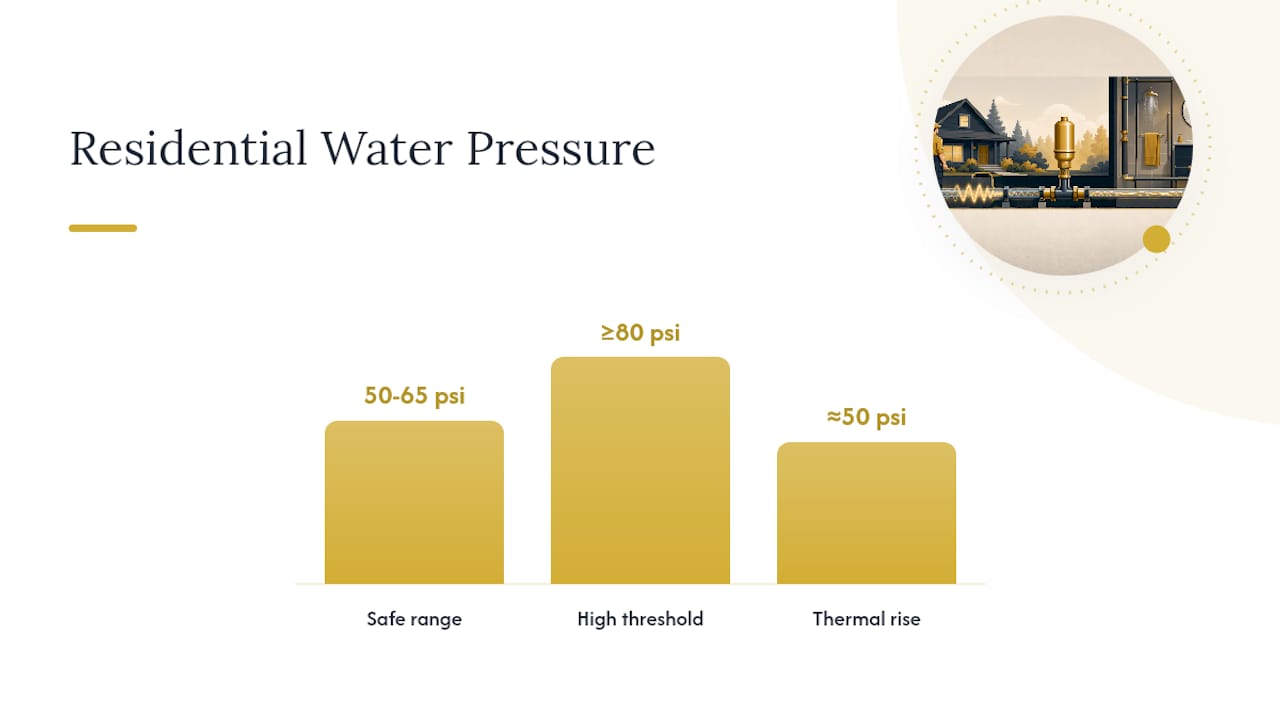
A pressure-reducing valve installed at the main brings pressure down to a safe range and directly shrinks the size of every surge that follows. If you already have a check valve or backflow preventer creating a closed plumbing system, there's a second factor to consider: heating water inside a closed system can raise pressure by 50 psi or more with nowhere for that expansion to go. That's a classic setup for chronic hammer that no arrestor alone will fully solve.
The fix in that case is a properly sized thermal expansion tank, which gives expanding water somewhere to go instead of building pressure against closed valves. The most reliable systems combine both approaches:
- Measure and correct baseline pressure with a PRV if it's running high.
- Add a thermal expansion tank if you have a closed system with a check valve or backflow preventer.
- Only then rely on arrestors to handle the remaining shock from valve closures.
When to Call a Plumber Instead of Fixing It Yourself
A few signs mean it's time to bring in a licensed pro rather than keep troubleshooting: hammering that returns within weeks of a DIY fix, stub-outs buried behind finished walls with no accessible access point, static pressure well above 80 psi, or visible pipe movement and stressed fittings.
Here's what a professional visit typically covers:
- Inspection of valve types, pipe routing, and accessible versus in-wall connections.
- Pressure and system diagnosis, including whether a PRV or expansion tank is warranted.
- Corrective work, which might mean opening a wall to place an arrestor at code-required proximity, rerouting a branch line, or upsizing an undersized run.
Ask any plumber you hire whether the arrestor placement will meet the six-diameter rule and whether permit filing is needed for the work, since in-wall plumbing changes often require it.
An Engineering Firm's Take on Getting This Right the First Time
Most water hammer problems don't need an engineer, but the ones that keep coming back usually do. As someone who has reviewed plumbing designs across residential and commercial projects, I've noticed the same pattern: homeowners install an arrestor, the noise fades for a few months, then returns because the arrestor was undersized, placed too far from the valve, or masking a pressure problem nobody measured.
The reliable order of operations is proximity and sizing first, pressure control second, and permit coordination whenever walls come open. Skip the pressure check and you'll keep replacing arrestors that were never the real fix. If your project involves opening walls, adding a PRV to a whole building system, or coordinating with a local building department, that's the point where a plumbing engineering review earns its cost over another round of trial-and-error plumbing calls.
— Joseph
Get a Code-Compliant Fix from Bazini Engineering
Baziniengineering designs corrective plumbing systems that solve water hammer at the source instead of masking it with another arrestor swap. Where a typical plumbing service stops at replacing parts, our engineers diagnose pressure, sizing, and placement together, then produce drawings that satisfy your local building department the first time.

A typical engagement starts with a site inspection covering pressure readings, valve locations, and pipe routing, followed by written recommendations and specifications, and finishing with construction drawings and permit support where the work requires it. That last step matters most on larger buildings, where an undersized PRV or a poorly placed arrestor can affect multiple units at once instead of one bathroom.
If your building has recurring hammer, a closed system with unresolved thermal expansion, or in-wall work that needs permit filing, Bazini Engineering's plumbing services can review your system and specify the corrective design your project needs. Reach out through the services page to start a conversation about your building's plumbing system.

Sources
For readers who want the underlying standards, the IRC 2024 arrestor requirement explains the code basis for placement, PDI-WH201 sizing guidance covers fixture-unit sizing, Zurn's installation instructions give manufacturer-specific mounting details, and Inspectapedia's diagnostic guide walks through homeowner troubleshooting step by step.