
TL;DR:
- A plumbing engineer is a licensed professional who designs, calculates, and coordinates fluid systems in buildings from initial concept to completion. They focus on system performance, code compliance, and sustainability, significantly reducing construction conflicts. Early involvement in design phases enhances project efficiency, and BIM technology helps resolve spatial conflicts before construction begins.
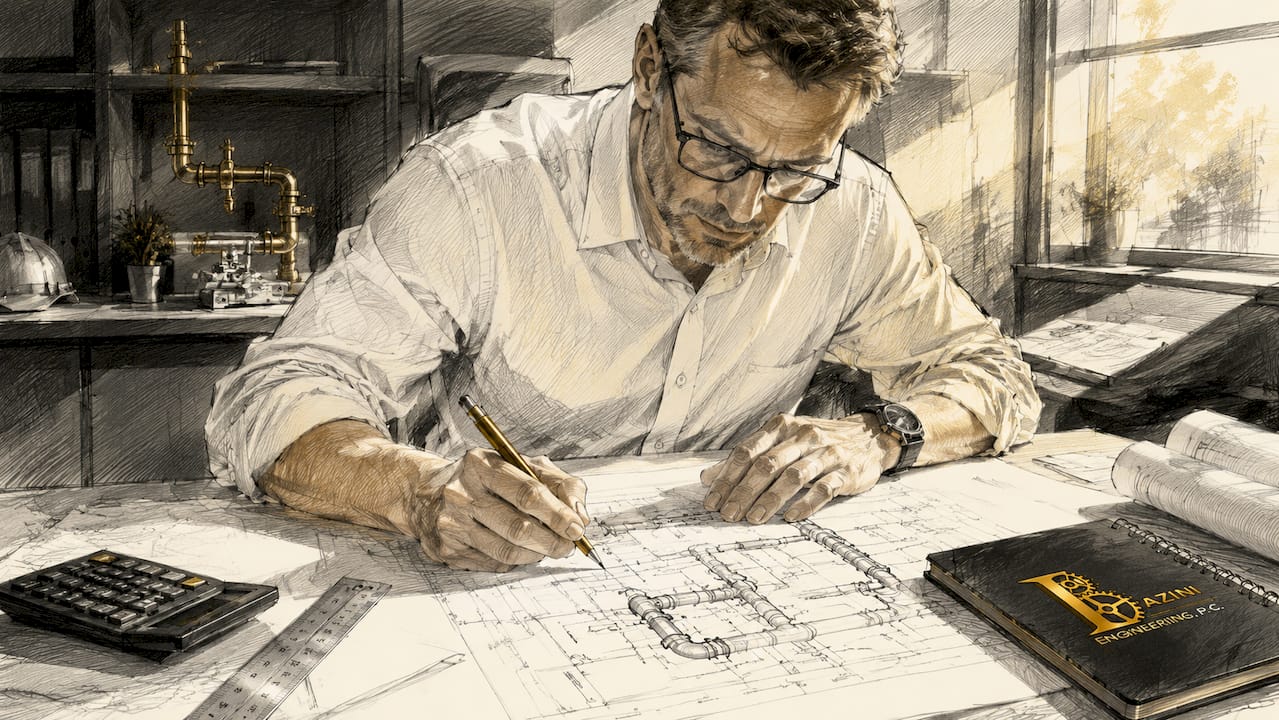
A plumbing engineer is defined as the licensed professional responsible for designing, calculating, and coordinating all fluid-based systems in a building, including potable water, sanitary drainage, stormwater, gas piping, and fire protection. The role of plumbing engineer in buildings spans the entire project lifecycle, from early concept through final commissioning. Plumbing engineers are not the same as plumbers. They operate at the design and compliance level, holding Professional Engineer (PE) licensure and signing construction documents as the Engineer of Record. Firms like Baziniengineering, which specialize in MEP/FP engineering across New York and Florida, rely on plumbing engineers as the technical backbone of every building system that moves water, gas, or suppression agents through a structure.
What are the key responsibilities of a plumbing engineer in building design?
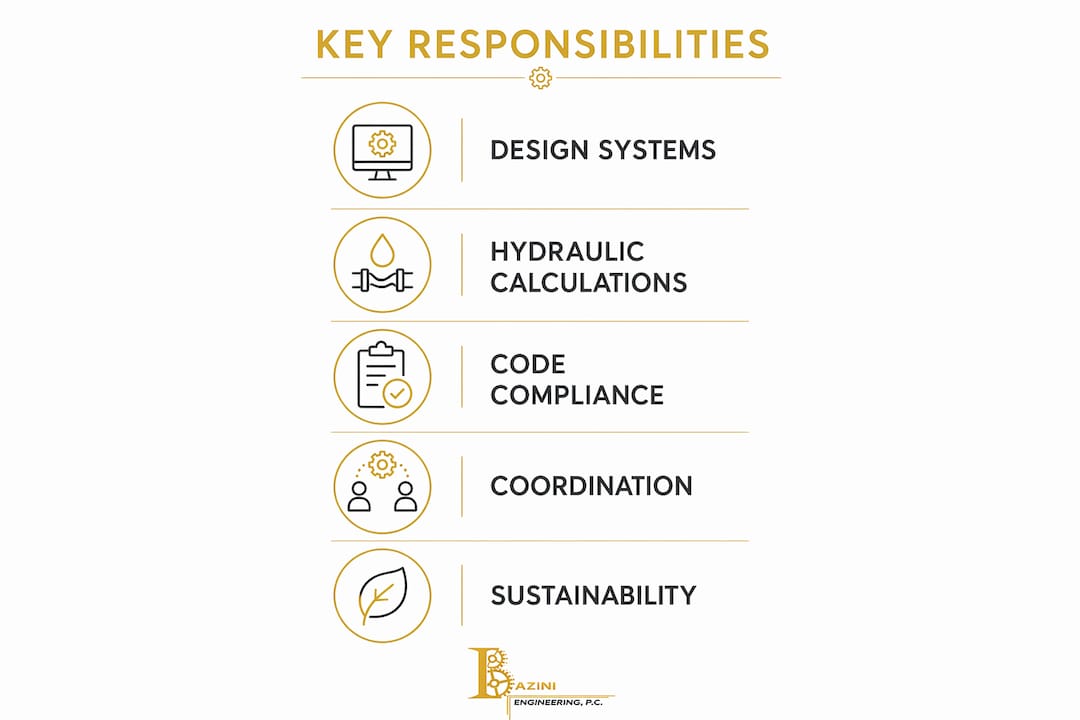
Plumbing engineers design and coordinate the full range of fluid systems that make a building functional and safe. Their work begins at the schematic design phase and continues through construction administration and final system certification.
Core plumbing engineer responsibilities include:
- Water supply systems: Sizing cold and hot water distribution piping, calculating pressure requirements, and specifying pumps, water heaters, and storage tanks.
- Sanitary and stormwater drainage: Designing gravity and pressure drainage networks, sizing interceptors, and routing stormwater to compliant discharge points.
- Gas piping: Calculating gas loads, sizing distribution mains, and coordinating with utility providers and mechanical engineers for boiler and equipment connections.
- Fire protection coordination: Integrating sprinkler system layouts with architectural and structural plans, often in direct collaboration with fire protection engineers.
- Hydraulic calculations and pipe sizing: Applying the International Plumbing Code (IPC), local amendments, and ASHRAE standards to verify that every pipe, valve, and fixture performs within design parameters.
- Construction documents: Producing permit-ready drawings and specifications that contractors can build from and that code officials can review.
- Site inspections and commissioning: Conducting site inspections, leak tests, contractor coordination, and certifying that installed systems match design intent.
Sustainability is now a standard deliverable, not an optional add-on. Plumbing engineers specify water-efficient fixtures rated under EPA WaterSense, design greywater reuse systems, and size rainwater harvesting tanks to reduce municipal water demand.
Pro Tip: Engage the plumbing engineer during schematic design, not after the floor plans are set. Vertical shaft locations and equipment room sizes are nearly impossible to change once structural coordination begins.
How does a plumbing engineer differ from a plumber?
The distinction between a plumbing engineer and a plumber is one of scope, not hierarchy. Both are necessary. Neither replaces the other.
| Dimension | Plumbing Engineer | Plumber |
|---|---|---|
| Primary function | System design, calculation, and code compliance | Installation, maintenance, and repair |
| Licensing | Professional Engineer (PE) licensure | State trade license |
| Education | Bachelor's or master's degree in mechanical or civil engineering | Apprenticeship and vocational training |
| Deliverables | Stamped drawings, specifications, hydraulic calculations | Installed pipe, fixtures, and connections |
| Project phase | Design through commissioning | Construction and post-occupancy |
| Liability | Holds professional liability as Engineer of Record | Liable for workmanship and code compliance of installed work |
A licensed PE acts as the Engineer of Record for plumbing scope on commercial projects, signing and sealing construction documents and carrying professional liability. That accountability does not transfer to the installing plumber.
The practical benefit of this division is clear. A plumbing engineer identifies a thermal expansion problem in a hot water recirculation loop at the design stage. The plumber installs the expansion tank the engineer specified. Without the engineer's calculation, the plumber would install what fits, and the building owner would pay for the repair after the pipe joint fails. Engineers preempt the failures that plumbers are later called to fix.
Collaboration between the two disciplines produces the best outcomes. Experienced plumbers often flag constructability issues during design review, and plumbing engineers incorporate that feedback into revised drawings before construction starts.
How do plumbing engineers integrate with MEP engineering and building design?
Plumbing engineering is one of three pillars within the Mechanical, Electrical, and Plumbing (MEP) discipline. The three systems share walls, ceilings, shafts, and equipment rooms. Conflicts between them are expensive to resolve after construction begins.
Integrated MEP design with coordinated models prevents costly construction conflicts and ensures system efficiency. The mechanism that makes this possible at scale is Building Information Modeling (BIM).
Key integration points between plumbing and the broader building design team include:
- Structural coordination: Plumbing engineers locate pipe penetrations through beams and slabs early, so structural engineers can add sleeves or reinforce openings before concrete is poured.
- Mechanical coordination: Domestic hot water systems connect directly to boilers and heat exchangers specified by the mechanical engineer. Pipe routing must account for HVAC ductwork in shared ceiling cavities.
- Electrical coordination: Booster pumps, water heaters, and sewage ejectors all require dedicated electrical circuits. Plumbing engineers provide load data to the electrical engineer during design development.
- Fire protection integration: Sprinkler mains share riser shafts with domestic water piping. Coordinating these early avoids shaft size conflicts that force expensive architectural revisions.
BIM and 3D clash detection allow plumbing engineers to identify and resolve spatial conflicts with structural and MEP systems before construction starts. Early conflict resolution is far less expensive than field rework. A pipe clash discovered in a BIM model costs hours to fix. The same clash discovered during construction costs days and significant money.
The table below shows how plumbing systems connect to other building disciplines:
| Plumbing system | Connected discipline | Coordination requirement |
|---|---|---|
| Domestic hot water | Mechanical | Boiler sizing, heat exchanger selection |
| Booster pump | Electrical | Dedicated circuit, motor starter |
| Sprinkler main | Fire protection | Shared riser shaft, water supply sizing |
| Floor drain | Structural | Slab penetration, waterproofing detail |
| Gas piping | Mechanical | Equipment gas loads, utility meter sizing |
What emerging trends are shaping plumbing engineering in 2026?
The plumbing engineer's role is expanding beyond pipe sizing and code compliance. Digital innovation and sustainability are reshaping the profession, requiring engineers to master traditional hydraulic methods alongside environmental and smart technology integration.
Current trends with direct impact on building projects include:
- Leak detection sensors: Smart building technologies like leak detection sensors are now specified at the design stage, not added as afterthoughts. Water system failures rank among the most expensive operational building problems. Sensors integrated into the design reduce that risk before the building opens.
- Water recycling and rainwater harvesting: Municipal water restrictions and green building certification programs like LEED and WELL require engineers to design closed-loop systems that reduce potable water consumption.
- Environmental code compliance: New York City's Local Law 97 and similar energy and sustainability mandates require plumbing engineers to calculate the carbon impact of water heating systems and specify low-emission alternatives.
- Thermal and acoustic management: Thermal expansion and acoustic impact within plumbing systems require careful design to prevent long-term maintenance issues. Pipe expansion joints, acoustic insulation, and vibration isolation are now standard specifications on commercial projects.
- Space planning for maintenance access: Securing adequate space for vertical shafts and maintenance access early in architectural design is critical. Retrofitting access panels or enlarging shafts after construction is among the most avoidable costs in building renovation.
Pro Tip: Specify leak detection sensors at the design stage on projects with raised flooring, mechanical rooms, or high-value tenant spaces. The cost of a sensor network is a fraction of one major water damage claim.
The importance of plumbing engineers extends beyond technical design. Plumbing systems are the hidden infrastructure protecting public health by preventing contamination between potable water and wastewater. That public health function is why PE licensure and professional accountability exist in the first place.
Key Takeaways
The plumbing engineer is the licensed professional who designs, coordinates, and certifies every fluid-based system in a building, making their early involvement the single most effective way to prevent costly construction conflicts and operational failures.
| Point | Details |
|---|---|
| Core scope of the role | Plumbing engineers design water supply, drainage, gas, and fire protection systems from concept through commissioning. |
| Engineer vs. plumber | Engineers design and hold PE liability; plumbers install and maintain. Both are necessary on every project. |
| MEP integration | BIM-based clash detection resolves pipe conflicts with structural and mechanical systems before construction begins. |
| Emerging priorities | Leak detection sensors, water recycling, and thermal management are now standard design deliverables, not optional upgrades. |
| Early engagement matters | Involving the plumbing engineer at schematic design prevents shaft sizing conflicts and expensive late-stage redesigns. |
Why plumbing engineers are the most underestimated professionals on any project
After years of working on commercial and institutional projects, I have seen the same pattern repeat. The architect and structural engineer are brought in on day one. The MEP team, including the plumbing engineer, is brought in after the floor plans are nearly finalized. That sequence is backwards, and it costs owners real money.
Plumbing engineers are, in the most literal sense, guardians of public health. The separation between potable water and wastewater is not a detail. It is the reason waterborne disease is rare in modern buildings. When that separation is compromised by a design error, the consequences go far beyond a repair bill.
The professionals I respect most in this field treat BIM coordination as a non-negotiable, not a premium service. They catch the conflicts that would otherwise become field change orders. They specify the expansion joint that prevents the pipe failure five years after occupancy. That kind of foresight is what separates a good plumbing design from a great one.
My advice to architects and construction managers: treat the plumbing engineer as a design partner from the first site meeting. The cost of that early involvement is always less than the cost of the problems it prevents.
— Joseph
Plumbing engineering services from Baziniengineering
Baziniengineering provides full-scope plumbing engineering design for commercial, residential, institutional, and industrial projects across New York City, Long Island, Westchester County, and Florida. The firm's licensed engineers handle everything from hydraulic calculations and construction documents to BIM coordination, code compliance, and sustainability consulting.

Baziniengineering's MEP team coordinates plumbing systems directly with mechanical, electrical, and fire protection disciplines, reducing field conflicts and keeping projects on schedule. The firm has worked with the NYC Department of Buildings and FDNY on permit-sensitive projects where accuracy and code compliance are non-negotiable. For teams that need a reliable engineering partner from schematic design through commissioning, Baziniengineering's full MEP services are built for exactly that scope.
FAQ
What is the role of a plumbing engineer in buildings?
A plumbing engineer designs, calculates, and coordinates all fluid-based systems in a building, including potable water, sanitary drainage, stormwater, gas piping, and fire protection, from concept through commissioning.
How does a plumbing engineer differ from a plumber?
A plumbing engineer holds PE licensure and is responsible for system design, hydraulic calculations, and code compliance. A plumber holds a trade license and is responsible for physical installation, maintenance, and repair.
Why is plumbing design in buildings critical to public health?
Proper plumbing design prevents contamination between potable water and wastewater systems. That separation is the primary mechanism protecting building occupants from waterborne illness.
When should a plumbing engineer be involved in a building project?
A plumbing engineer should be engaged at the schematic design phase. Early involvement allows shaft sizing, equipment room planning, and MEP coordination to happen before structural and architectural decisions are locked in.
What is BIM and why do plumbing engineers use it?
BIM, or Building Information Modeling, is a 3D digital modeling process that allows plumbing engineers to detect spatial conflicts with structural and MEP systems before construction begins, reducing costly field rework.