
TL;DR:
- Proper HVAC maintenance combines regular scheduling, condition-based triggers, and thorough documentation to extend equipment lifespan and reduce costs. Techniques like filter replacements, geographic scheduling, and early seasonal planning improve efficiency and compliance. Sensor data and hybrid approaches optimize performance, ensuring early failure detection and operational reliability.
HVAC maintenance best practices are defined as a layered program of monthly, quarterly, and annual preventive tasks combined with condition-based triggers to maximize equipment efficiency and extend system lifespan. HVAC systems consume up to 40% of a building's total energy usage. Poorly maintained systems use 20% more energy and face failure costs 3–5 times higher than well-maintained ones. Frameworks like ASHRAE Standard 180 and tools like OxMaint give facility managers a structured path to reduce unplanned downtime, protect capital assets, and meet compliance requirements. Preventive maintenance alone yields a 545% ROI and cuts unplanned downtime by 73%.
1. What are the top routine HVAC maintenance tasks to prioritize?
Monthly filter inspection and replacement is the single highest-impact task in any heating and cooling maintenance program. Clogged filters force the system to work harder, raise energy consumption, and accelerate wear on motors and coils. Replacing or inspecting filters every 30 days on commercial systems is the baseline, not the exception.
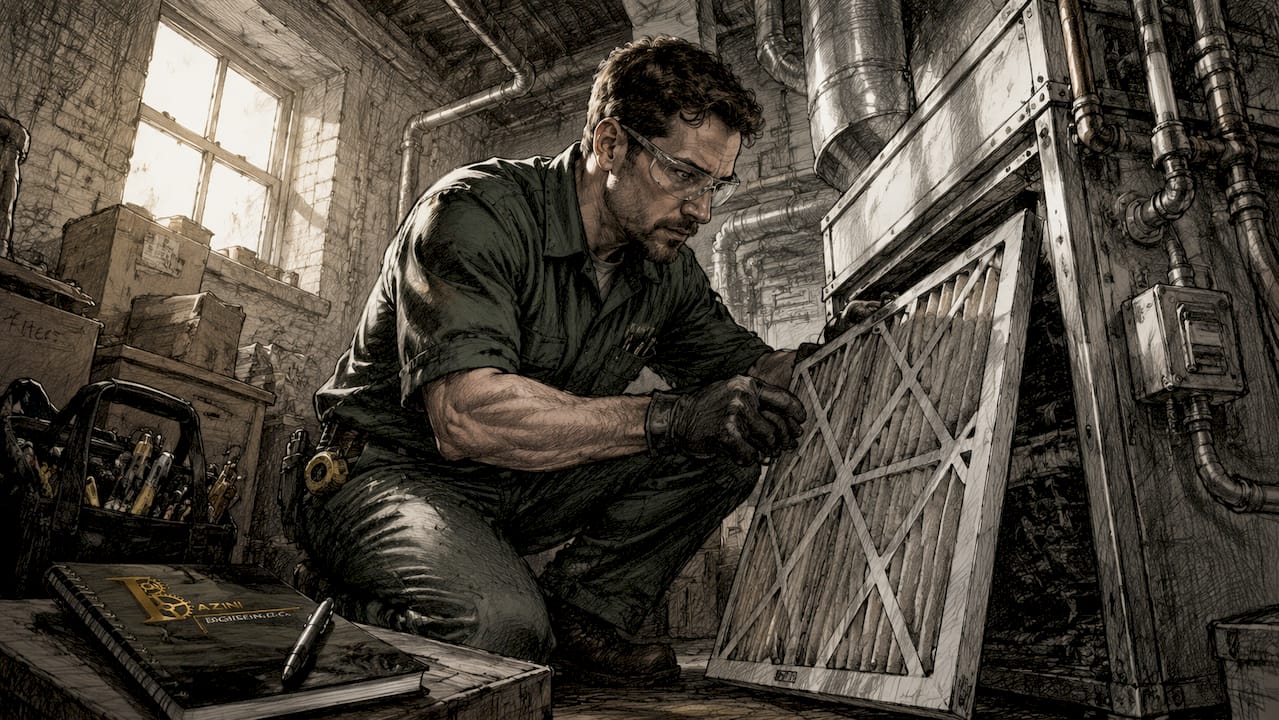
Quarterly tasks carry equal weight for long-term reliability. Coil cleaning removes the dirt buildup that insulates heat transfer surfaces and drives up operating costs. Belt inspections catch fraying before a snap causes a full system shutdown. Refrigerant checks confirm charge levels are within manufacturer specs, since even a slight undercharge reduces cooling capacity measurably.
Annual tasks complete the cycle. A full system evaluation covers heat exchanger integrity, controls calibration, and electrical terminal tightening. Monthly critical tasks also include condensate drain clearing, which prevents water damage and mold growth in air handling units.
Interior and exterior upkeep rounds out the routine. The U.S. Department of Energy recommends clearing at least 2 feet around outdoor units and flushing drain lines quarterly to prevent equipment shutdown and water damage. These owner-performed tasks are low cost and high return.
Pro Tip: Never seal duct leaks with standard duct tape. Mastic sealant or metal-backed foil tape is the correct fix. Duct leaks cause 20–30% conditioned air loss, and duct tape fails within months under heat cycling.
2. How to implement HVAC equipment scheduling best practices
Calendar-based fixed schedules are the starting point, but they are not the complete answer. A system running in a lightly occupied office building does not need the same service frequency as one running 24/7 in a hospital or data center. Condition-based maintenance uses sensor data, runtime hours, and performance deviations to trigger service calls only when the equipment actually needs attention.
Clustering technician calls geographically is one of the most underused efficiency gains in HVAC equipment scheduling best practices. Geographic clustering saves 45–90 minutes of drive time per technician per day. Facility managers using manual scheduling lose an average of 23 hours monthly to inefficient routing alone.
Automated scheduling systems replace that lost time with precision. Automated reminders and geo-based route assignment reduce missed appointments and balance technician workloads without manual intervention. Replacing manual scheduling with automated systems measurably improves dispatch efficiency and customer compliance rates.
Seasonal pre-scheduling is non-negotiable for peak readiness. Spring AC tune-ups and fall heating inspections should be booked 8–12 weeks in advance. Planning seasonal workloads that far ahead allows facility managers to use tiered workforce models, where core teams handle complex diagnostics and seasonal staff manage high-volume routine calls.
Pro Tip: Integrate condition monitoring sensor data directly into your scheduling platform. Tools that combine IoT sensor feeds with geographic technician routing reduce wasted labor and catch failures before they escalate.
3. Which compliance standards and documentation are essential?
ASHRAE Standard 180 is the governing framework for commercial HVAC maintenance in the United States. The 2024 International Mechanical Code mandates Standard 180 compliance in many jurisdictions, making it a legal requirement rather than a best practice recommendation. Standardized maintenance under this framework reduces emergency call-outs by 65% and extends equipment life by 30–40%.
Documentation is where most programs fail. Standard 180 requires detailed records that go beyond a technician's sign-off. Required documentation includes:
- Filter static pressure drop readings with pass/fail thresholds
- Discharge air temperature deviations from design specs
- Inspection results tied to OEM calibration standards
- Frequency adherence logs showing tasks were completed on schedule
- Retention of all records for audit review
Non-compliance with documentation requirements leads to audit failures, operational penalties, and loss of warranty coverage. The standard requires that pass/fail criteria align with OEM specifications, not generic industry averages.
Securing budget for documentation systems is a separate challenge. Facility managers who present compliance records as risk mitigation tools, rather than administrative overhead, consistently win internal budget approvals faster. Frame documentation as insurance against the 3–5x failure cost multiplier that comes with neglected systems.
4. Preventive vs. predictive maintenance: which gives better ROI?
Preventive maintenance operates on fixed schedules. Tasks like filter changes, coil cleaning, and belt inspections happen at set intervals regardless of actual system condition. This approach is reliable, easy to plan, and well-supported by frameworks like ASHRAE Standard 180.
Predictive maintenance operates on condition-based triggers. IoT sensors monitor vibration, temperature deviation, and runtime data to predict failures 3–6 weeks before they occur. Blending preventive and predictive approaches delivers better outcomes than fixed schedules alone.
| Factor | Preventive Maintenance | Predictive Maintenance |
|---|---|---|
| Trigger | Fixed calendar schedule | Sensor data and condition thresholds |
| Cost structure | Predictable, lower per-visit cost | Higher upfront sensor investment |
| Failure prevention | Reduces risk through routine | Catches specific failures early |
| Best for | Standard commercial facilities | Critical or high-load systems |
| ROI profile | 545% documented return | Higher long-term savings potential |
"Generic checklists produce generic results." The most effective programs use sensor data to predict failures weeks ahead, then layer that intelligence onto a preventive maintenance foundation.
The recommendation for most facility managers is a hybrid strategy. Run preventive maintenance as the baseline for all systems. Apply predictive analytics to high-criticality equipment like chillers, rooftop units, and air handling units where an unplanned failure carries the highest operational cost. Fixed schedules waste resources when systems operate well. Condition-based triggers fill that gap without eliminating the structure that compliance requires.
Key takeaways
Effective HVAC maintenance requires a hybrid program that combines preventive schedules, condition-based triggers, and rigorous documentation to reduce costs, extend equipment life, and meet ASHRAE Standard 180 compliance.
| Point | Details |
|---|---|
| Filter replacement is the top priority | Monthly filter checks prevent efficiency loss and protect motors from premature wear. |
| Geographic scheduling saves real time | Clustering technician routes saves 45–90 minutes daily and cuts 23 hours of monthly scheduling waste. |
| Documentation determines compliance | ASHRAE Standard 180 requires pass/fail records tied to OEM specs, not just task completion logs. |
| Hybrid maintenance delivers the best ROI | Combining preventive schedules with predictive sensor triggers yields better outcomes than either method alone. |
| Seasonal planning must start early | Book spring and fall HVAC inspections 8–12 weeks ahead to manage workforce capacity and avoid backlogs. |
What I've learned about HVAC maintenance that most guides skip
The biggest gap I see in facility maintenance programs is not the maintenance itself. It is the documentation. Teams perform the work, but they record it in ways that would never survive an audit. A technician's initials on a paper log do not satisfy ASHRAE Standard 180. You need pressure readings, temperature deviations, and pass/fail thresholds tied to OEM specs. When I review programs that have failed compliance audits, missing or vague records are the cause almost every time.
The second issue is the false choice between preventive and predictive maintenance. Facility managers often treat them as competing philosophies. They are not. Preventive maintenance gives you the structure and compliance baseline. Predictive analytics give you the early warning system. Running both is not expensive if you start by applying sensors only to your highest-criticality equipment and expand from there.
Scheduling is the third area where I see consistent waste. Manual scheduling on spreadsheets costs more in lost technician time than most managers realize. Twenty-three hours a month is nearly three full workdays. Switching to automated dispatch with geographic routing is one of the fastest payback investments a facility team can make.
The future of this field is AI-driven predictive maintenance combined with tiered workforce models. Core staff handle diagnostics and complex repairs. Seasonal staff handle volume. The facility managers who build that structure now will be far better positioned when labor markets tighten again.
— Joseph
How Baziniengineering supports your HVAC maintenance program
Facility managers who need engineering-level support for HVAC system planning, compliance design, or maintenance program structure have a direct resource in Baziniengineering.

Baziniengineering's mechanical engineering services cover HVAC system design, energy code compliance, and maintenance program development for commercial, institutional, and industrial properties across New York City, Long Island, and Westchester County. The firm's engineers work directly with facility teams to design systems that meet ASHRAE standards, support preventive maintenance schedules, and reduce long-term operating costs. Contact Baziniengineering to discuss how proper engineering design and compliance support can extend the life of your building's HVAC systems.
FAQ
What is ASHRAE Standard 180 and why does it matter?
ASHRAE Standard 180 is the primary compliance framework for commercial HVAC maintenance in the United States. The 2024 International Mechanical Code mandates it in many jurisdictions, making detailed maintenance documentation a legal requirement.
How often should HVAC systems be serviced?
Most commercial HVAC systems require service twice annually at minimum, with critical facilities needing quarterly or monthly attention. Standardized maintenance frequency reduces emergency call-outs by 65% and extends equipment life by 30–40%.
What is the difference between preventive and predictive HVAC maintenance?
Preventive maintenance follows fixed schedules for routine tasks like filter changes and coil cleaning. Predictive maintenance uses IoT sensor data to trigger service calls based on actual equipment condition, catching failures 3–6 weeks before they occur.
Why is duct tape not acceptable for sealing HVAC duct leaks?
Standard duct tape fails under heat cycling within months. Mastic sealant or metal-backed foil tape creates a durable seal that prevents the 20–30% conditioned air loss that duct leaks cause.
How far in advance should seasonal HVAC inspections be scheduled?
Facility managers should pre-schedule spring AC tune-ups and fall heating inspections 8–12 weeks ahead. Early planning allows for tiered workforce deployment and prevents the backlogs that drive up emergency service costs during peak seasons.