
The most common examples of building energy waste in commercial properties are HVAC systems running during unoccupied hours, uncontrolled ventilation losses, lighting circuits left on overnight, unmanaged plug and process loads, failed economizers, poorly commissioned hydronic and air systems, and envelope leaks that bleed conditioned air year-round. According to the EPA, a significant portion of the energy consumed in commercial buildings is avoidable waste. Your fastest next step: pull your last 12 months of utility bills, compare them against your building's square footage in ENERGY STAR Portfolio Manager, and flag any system running outside its scheduled occupancy window in your building automation system (BAS).
The highest-impact waste categories at a glance:
- HVAC scheduling faults (systems running nights, weekends, and holidays)
- Uncontrolled outdoor air and envelope leaks
- Lighting and exterior fixtures left on after hours
- Unmanaged plug loads and miscellaneous electrical loads (MELs)
- Failed or bypassed economizers
- Poorly commissioned or hydraulically unbalanced HVAC and hydronic systems
- Aging, oversized, or poorly maintained equipment
- Domestic hot water circulation running 24/7 without controls
Key Takeaways
Roughly one-third of commercial building energy is avoidable waste, and the highest-payback fixes are almost always operational corrections that cost little or nothing to implement.
| Point | Details |
|---|---|
| Start with benchmarking | Enter 12 months of utility data into ENERGY STAR Portfolio Manager to establish your baseline EUI and identify the gap. |
| Audit BAS schedules first | Check override logs and runtime trends for all primary AHUs and HVAC equipment before spending on hardware. |
| Fix operations before capital | BAS schedule corrections and setpoint resets deliver 5% savings at near-zero cost; prioritize these before any retrofit. |
| Commission and re-commission | Actual energy use frequently exceeds design projections; quarterly trend reviews and annual re-commissioning close that gap. |
| Baziniengineering for implementation | Baziniengineering provides MEP audits, retro-commissioning, HVAC design, and Local Law 97 compliance support across New York and Florida. |
Table of Contents
- 1. What are the most common examples of building energy waste?
- 2. How do you detect and measure energy waste in your building?
- 3. How to prioritize fixes and estimate realistic savings
- 4. Why commissioning closes the building energy performance gap
- 5. What facility managers consistently get wrong about energy waste
- Baziniengineering turns audit findings into a remediation plan
- Sources
1. What are the most common examples of building energy waste?
A ScienceDirect study identified 13 distinct types of energy waste across four categories: management-behavioral, management-technical, technology-related, and design-related. That taxonomy maps cleanly onto what MEP engineers find in commercial buildings every week. Below are the most common examples, organized by category, each with a practical fix.
Management-behavioral waste
Forgotten BAS overrides. A technician overrides the AHU schedule for a weekend event and never restores it. The unit runs 24/7 for months. This is one of the most common examples of energy loss in buildings, and it costs nothing to fix beyond a 30-minute BAS audit. Check your override log weekly.

Manual lighting left on. Occupants leave conference rooms, restrooms, and storage areas lit overnight. A simple occupancy sensor retrofit on those circuits typically pays back in under two years.
Thermostat setpoint creep. Without locked setpoints, occupants nudge heating and cooling setpoints to extremes, forcing equipment to run harder and longer. Lock setpoints through the BAS and set a documented exception process.
Management-technical waste
No setback schedules for nights and weekends. MIT researchers document that heating and cooling unoccupied spaces is one of the most frequent sources of waste in commercial buildings. A properly programmed night setback (heating to 60°F, cooling to 85°F in unoccupied mode) can cut HVAC runtime significantly without any capital spend.
Simultaneous heating and cooling. Dual-duct or four-pipe systems that heat and cool the same zone at the same time are burning energy on both ends. This usually traces to a controls misconfiguration or a failed zone valve, both of which are tune-up items.
Deferred maintenance on filters and coils. Dirty coils and clogged filters force fans and compressors to work harder, raising energy consumption and shortening equipment life. A quarterly PM schedule costs far less than the energy penalty.
Technology-related waste
Failed or bypassed economizers. An economizer that is stuck closed wastes free cooling on mild days. One that is stuck open floods the building with unconditioned outdoor air in summer. Either failure drives up energy use. Economizer function should be verified at least annually.
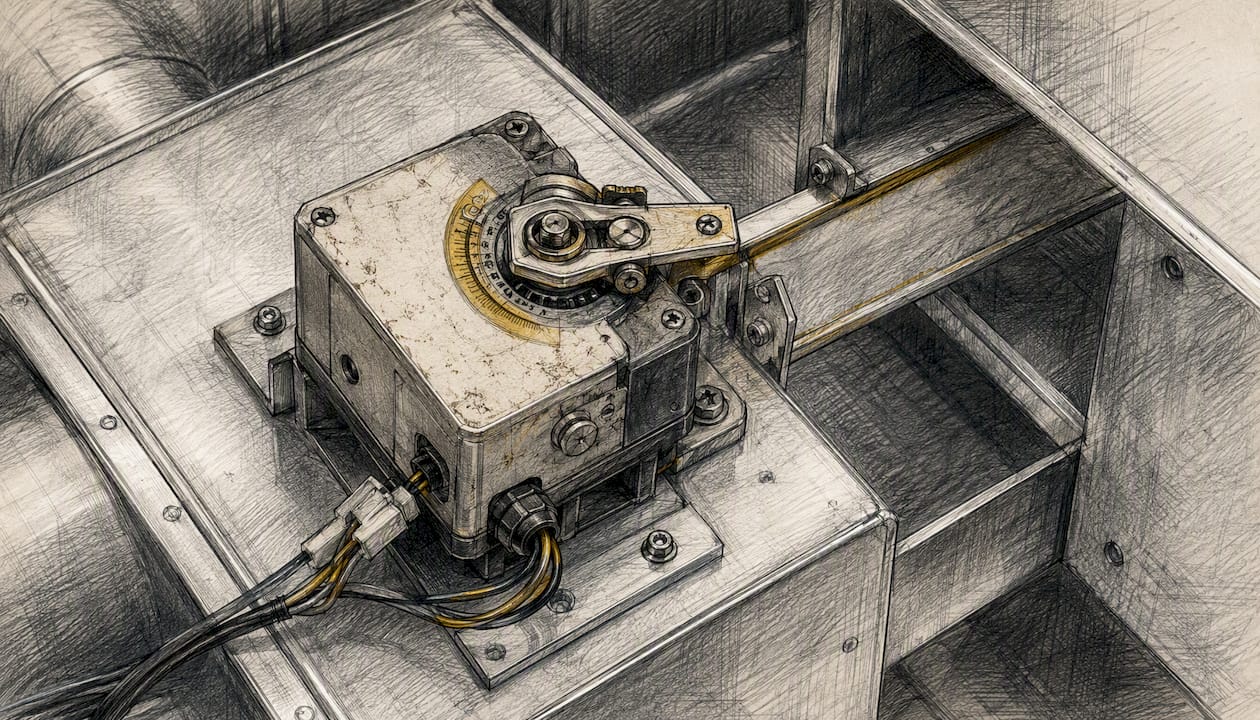
HVAC running at full capacity during part-load conditions. HVAC is the largest single use in commercial buildings, accounting for a substantial share of total energy use. A chiller or air handler sized for peak load and running at full speed during mild weather is deeply inefficient. Variable frequency drives (VFDs) on fans and pumps, combined with proper controls tuning, address this directly.
Servers and IT closets without dedicated cooling. Small IT rooms often rely on building HVAC that runs continuously to serve a handful of servers. A properly sized, dedicated cooling unit with its own schedule is almost always more efficient.
Domestic hot water (DHW) circulation pumps running 24/7. A recirculation pump with no time clock or occupancy control runs all night to keep hot water at the tap. A simple timer or demand-based control cuts that runtime dramatically.
Design-related waste
Envelope leaks and uncontrolled infiltration. Air leaking through penetrations, poorly sealed windows, and deteriorated weatherstripping forces HVAC systems to condition air that was never meant to enter the building. Thermal imaging and blower-door testing locate these leaks quickly.
Oversized or mismatched equipment. Equipment sized for a load that no longer exists (after a tenant change or renovation) short-cycles, operates inefficiently, and wears out faster. A load recalculation is the right starting point before any replacement.
Poorly balanced hydronic systems. Hot water heating systems where flow is not balanced deliver too much heat to some zones and too little to others, causing occupants to open windows in overheated areas while the boiler keeps firing. Hydraulic balancing is a one-time fix with lasting results.
Most BAS platforms flag this in two or three clicks.*
2. How do you detect and measure energy waste in your building?
Starting with utility bills is not just convenient — it is the highest-leverage first step. A spike in energy use intensity (EUI, measured in kBtu per square foot per year) relative to similar buildings tells you waste exists before you ever walk the mechanical room.
A practical audit sequence:
- Benchmark against peers. Enter 12 months of utility data into ENERGY STAR Portfolio Manager. A score below average means your building uses more energy than many comparable properties. That gap is your target.
- Pull BAS trend data. Review runtime logs for primary AHUs, chillers, boilers, and exhaust fans. Compare actual runtime against the occupancy schedule. Any unit running more than 10% outside scheduled hours warrants investigation.
- Walk the perimeter and mechanical spaces. Check AHU schedules at the unit controller, not just the central BAS. Verify economizer damper position manually. Look for condensation on ducts (a sign of uncontrolled infiltration) and feel for drafts at windows and penetrations.
- Audit lighting circuits. Walk the building after hours and note which circuits are energized. Check photocell and time-clock settings on exterior fixtures.
- Inventory plug and process loads. Identify always-on equipment: vending machines, printers, task lighting, and supplemental electric heaters. These miscellaneous electrical loads (MELs) can account for a meaningful share of base load in office buildings.
- Deploy short-term submetering on suspect circuits. A clamp-meter logger on a suspicious circuit over 2–4 weeks gives you hard data on runtime and consumption without a permanent installation.
Thermal imaging is particularly effective for envelope diagnostics. A single infrared scan of the building exterior on a cold morning reveals air leaks, missing insulation, and thermal bridges that are invisible to the naked eye. For ventilation pathways, tracer smoke testing confirms whether outdoor air is entering through unintended paths.
When the BAS data and short-term logging point to a systemic problem (not just a single override), that is the signal to escalate to a full retro-commissioning assessment with an MEP consultant. The DOE's Commercial Buildings Integration Program specifically promotes system-level monitoring and integration as the path to sustained savings.
Pro Tip: Verify AHU runtime against the occupancy schedule using BAS trend data before spending a dollar on hardware. In most buildings, correcting scheduling errors alone reduces HVAC runtime by a measurable amount — and it takes less than an hour to check.
3. How to prioritize fixes and estimate realistic savings
The decision rule is straightforward: fix what costs nothing first, then spend money in order of payback period. No-cost operational fixes (schedule corrections, setpoint resets, override removals) should always come before any capital project.
| Fix Category | Typical Energy System | Illustrative Savings Range | Approximate Payback |
|---|---|---|---|
| BAS schedule corrections | HVAC, lighting | a moderate percentage of system energy | Immediate |
| Lighting controls (occupancy sensors, time clocks) | Lighting | a significant portion of lighting energy | 1–3 years |
| Economizer repair and tuning | HVAC | a moderate portion of cooling energy | 1–2 years |
| VFD installation on fans/pumps | HVAC | a notable portion of motor energy | 2–5 years |
| Retro-commissioning | Whole building | a moderate percentage of total energy | 1–3 years |
| Envelope air sealing | HVAC load | a moderate share of heating/cooling energy | 3–7 years |
| Chiller or boiler replacement | HVAC | a significant share of system energy | 5 years |
Quick wins (no cost to low cost). Restoring BAS schedules, locking setpoints, and enabling night setback are the fastest path to savings. Lighting circuit audits and photocell replacements fall in the same category. These fixes require staff time, not capital.
Medium-cost operational fixes. Retro-commissioning, economizer repairs, and VFD tuning sit in the middle tier. Retro-commissioning, in particular, consistently delivers savings across HVAC, controls, and envelope systems in a single engagement. Paybacks in the 1–3 year range are common.
Capital projects. Chiller replacements, envelope retrofits, and full controls upgrades require lifecycle cost analysis before committing. A simple payback calculation is a starting point, but total cost of ownership (including maintenance savings and avoided failures) usually justifies the investment better than payback alone.
For NYC building owners, compliance risk adds a layer to this prioritization. Buildings subject to Local Law 97 compliance face escalating fines for exceeding carbon emissions limits, which can make capital projects financially urgent even when the energy payback alone looks long.
Avoid overstating savings before installation. Measure actual consumption before and after any fix using interval meter data or submetering. Post-installation measurement and verification (M&V) is the only way to confirm that a fix delivered what it promised.
4. Why commissioning closes the building energy performance gap
Commissioning and continuous re-commissioning are among the most evidence-backed tools for closing the gap between how a building was designed to perform and how it actually runs. An MDPI case-study analysis documents this performance gap directly: actual metered energy use in monitored buildings frequently exceeds theoretical design projections, and the authors recommend rigorous commissioning and continuous monitoring as the primary remedy.
The gap opens for predictable reasons. Controls sequences get modified during construction. Sensors drift out of calibration. Balancing reports get filed but never verified. By the time a building is two or three years into operation, the gap between design intent and actual performance can be substantial.
A short commissioning readiness checklist:
- Startup verification: confirm all equipment starts, stops, and stages per sequence of operations
- Sensor calibration: verify temperature, pressure, CO2, and flow sensors against a calibrated reference
- Sequence validation: test heating, cooling, economizer, and occupied/unoccupied transitions under real load conditions
- Hydraulic balancing: confirm design flow rates at all terminal units and coils
- Controls tuning: verify PID loop stability, setpoint authority, and override logging
- Economizer verification: test damper travel, enthalpy or dry-bulb controls, and minimum position
- Setpoint documentation: record all active setpoints and compare against design intent
A typical example from practice: a mid-size office building with a central AHU and VAV distribution had its economizer damper stuck at minimum position after a controls upgrade. The unit ran mechanical cooling on every mild day for two years before a trend review caught the fault. Correcting the damper actuator and recalibrating the controls sequence reduced cooling runtime measurably, confirmed by interval meter data over the following 90 days.
Continuous re-commissioning means scheduling quarterly BAS trend reviews and an annual re-commissioning walkthrough. It is not a large budget item, but it catches drift before it compounds.
Pro Tip: Schedule a quarterly BAS trend review as a standing calendar item. Most faults are visible in the data before they show up on the utility bill.
5. What facility managers consistently get wrong about energy waste
The most common surprise in a building energy audit is not the equipment. It is the controls. Specifically, it is the gap between what the BAS is programmed to do and what it is actually doing on any given Tuesday at 2 AM.
Forgotten overrides are the single most underestimated source of waste in commercial buildings. A schedule override entered for a one-time event, a tenant request, or a commissioning test stays active indefinitely unless someone explicitly removes it. In buildings with multiple technicians and no override documentation protocol, these accumulate over years. Restoring schedules costs nothing and often produces the largest single reduction in energy use of any action taken during an audit.
The second trap is treating commissioning as a one-time event. Buildings drift. Sensors fail. Tenants change. A building that was properly commissioned at turnover in 2018 has almost certainly accumulated faults by now. Continuous re-commissioning is not a luxury; it is the maintenance protocol that keeps the original design intent alive.
Third: plug loads and MELs are chronically underestimated. Facility managers focus on HVAC because it is the largest system, but the base load from always-on equipment, supplemental heaters, and unmanaged IT gear adds up.
The practical advice: document every override with a restoration date, require acceptance testing after any controls change, and treat the BAS trend log as a maintenance tool, not just a diagnostic one. These are habits, not capital projects, and they are what separate buildings that hold their efficiency gains from those that drift back within 18 months.
Baziniengineering turns audit findings into a remediation plan
An MEP engineering consultant converts what you find in an audit into a prioritized, implementable plan with validated savings targets. That is the gap between knowing you have a problem and knowing exactly what to fix, in what order, and at what cost.

Baziniengineering provides the full range of services that address the waste types covered here: energy audits and benchmarking, retro-commissioning and controls tuning, HVAC and mechanical system design, Local Law 97 compliance support for NYC properties, and plumbing and hydronic system engineering for DHW and heating systems. The firm is licensed in New York and Florida and works across NYC, Long Island, and Westchester County. To get started, schedule a scoping call or an on-site targeted audit through the Baziniengineering services page.
Sources
The most authoritative U.S. resources for building energy waste are the DOE, EPA, ENERGY STAR, and MIT's Energy Initiative. Each serves a different purpose in a real remediation workflow.
ENERGY STAR Portfolio Manager is the standard benchmarking tool for U.S. commercial buildings. Use it to establish your EUI, compare against peer buildings, and track progress over time. The Target Finder tool sets performance targets for new construction or major renovations.
DOE's Commercial Buildings Integration Program publishes program guidance, technology research, and case studies on system-level integration and monitoring. Use it when you are evaluating controls upgrades or whole-building energy management strategies.
DOE's Building Technologies Office provides practical technical guidance and tools for building operators. It is the right starting point for technology-specific research (VFDs, economizers, lighting controls) and for understanding federal incentive programs.
EPA's non-governmental buildings resources offer state and local program guidance alongside the commonly cited figure that roughly one-third of commercial building energy is avoidable. Use it to identify local utility programs and incentives that can offset retrofit costs.
MIT Energy Initiative research on wasted HVAC operation provides the academic grounding for occupancy-based controls and existing-infrastructure fixes. Useful when you need to make the business case internally for operational changes.
- About the Commercial Buildings Integration Program
- Energy Efficiency in Non-Governmental Buildings
- The identification and classification of energy waste for efficient energy supervision in manufacturing factories
- The Building Energy Performance Gap in Multifamily Buildings: A Detailed Case Study Analysis of the Energy Demand and Collective Heating System
- Reducing wasted energy in commercial buildings
- Energystar