
The most common FDNY violations building owners face are obstructed egress, non-functional self-closing doors, missing or disabled smoke and CO detectors, sprinkler obstructions or defects, fire alarm failures and unwarranted alarms, improper storage of combustibles, and lapses in required permits or Certificates of Fitness. A building in the Bronx with 117 open violations — including defective self-closing doors and nonfunctioning smoke detectors — lost three lives when open doors allowed fire to spread rapidly. Fix the highest-risk items first, document every correction, and file a Certificate of Correction within the 35-day window to avoid an OATH hearing.
Immediate triage, in order:
- Clear all egress paths, stairwells, and fire escapes of stored items and debris.
- Test every smoke and CO detector; replace any that fail.
- Confirm self-closing doors latch fully and are not propped open or padlocked.
- Inspect sprinkler heads for obstructions; post a fire watch if any system is impaired.
- Verify all required permits and Certificates of Fitness are current.
Before requesting FDNY re-inspection, capture:
- Dated photos of each corrected condition
- Contractor invoices or work orders with completion dates
- Alarm and sprinkler test reports
- Copies of current Certificates of Fitness
Violations originate from scheduled inspections and tenant or neighbor complaints. Look up open violations and summonses at any time through the FDNY Business portal.
Key Takeaways
The most effective way to reduce FDNY enforcement risk is to fix life-safety conditions first, document every correction, and submit the Certificate of Correction within 35 days.
| Point | Details |
|---|---|
| Life-safety violations first | Fix egress obstructions, self-closing doors, and detectors before any administrative lapse. |
| 35-day correction window | File your Certificate of Correction within 35 days of issuance to avoid an OATH hearing. |
| Documentation is mandatory | Dated photos, contractor invoices, and test reports are required to close a violation record. |
| Existing buildings follow current code | The 2014 Fire Code's operational requirements apply regardless of when your building was constructed. |
| Baziniengineering for licensed work | Sprinkler, alarm, and permit violations require a licensed PE; Baziniengineering handles design, certification, and FDNY coordination. |
Pro Tip: Keep a dated maintenance log of every walkthrough, repair, and test. A consistent log demonstrates good-faith compliance and can materially reduce penalties at an OATH hearing.
This article is general information, not a substitute for advice from a qualified lawyer. Consult a qualified legal professional about your own circumstances before acting on anything here.
Table of Contents
- How should you prioritize FDNY violations by enforcement risk?
- Misconceptions building owners get wrong about FDNY violations
- How to train building staff to prevent FDNY violations
- What fire code baseline applies to your NYC building?
- Documentation and certification requirements
- How long does it take to resolve an FDNY violation?
- What field experience shows about why violations keep recurring
- Bazini Engineering closes FDNY violations efficiently
- Sources
How should you prioritize FDNY violations by enforcement risk?
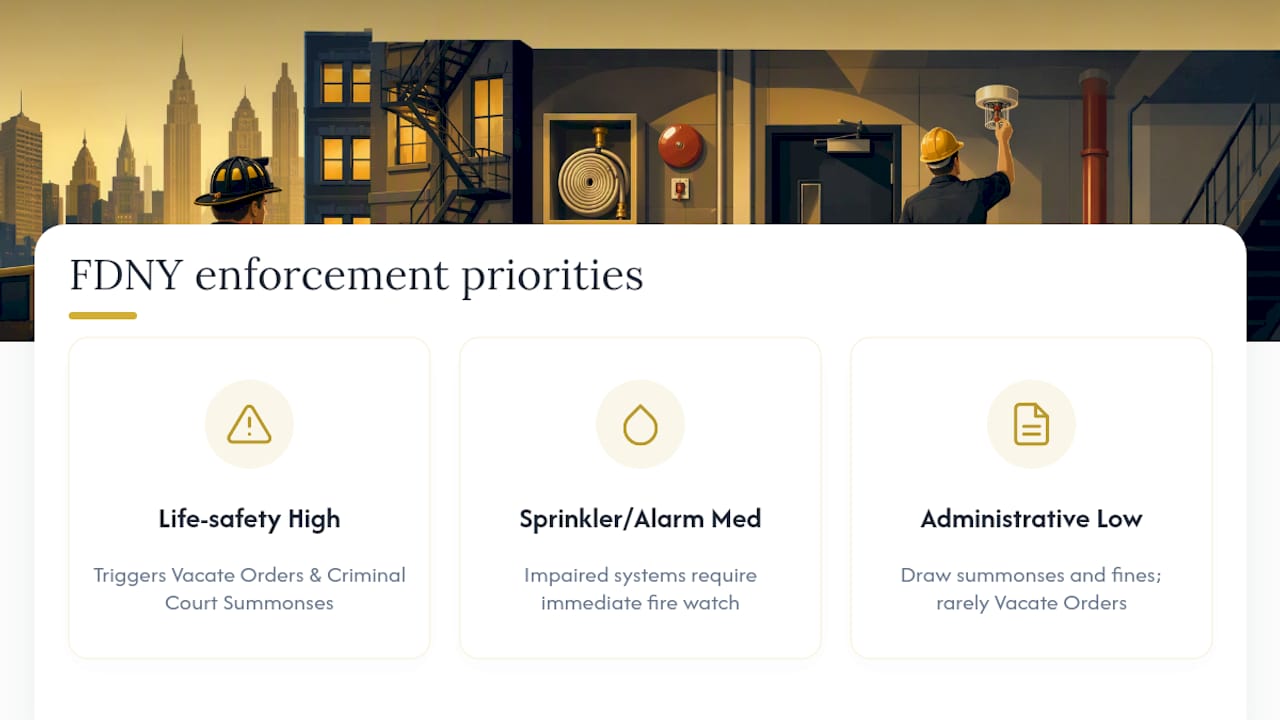
Not every violation carries the same urgency. The FDNY issues four types of enforcement actions: a Violation Order, a Vacate Order, an FDNY Summons, and a Criminal Court Summons. Vacate Orders and Criminal Court Summonses represent the most severe end — issued when conditions pose an immediate threat to life.
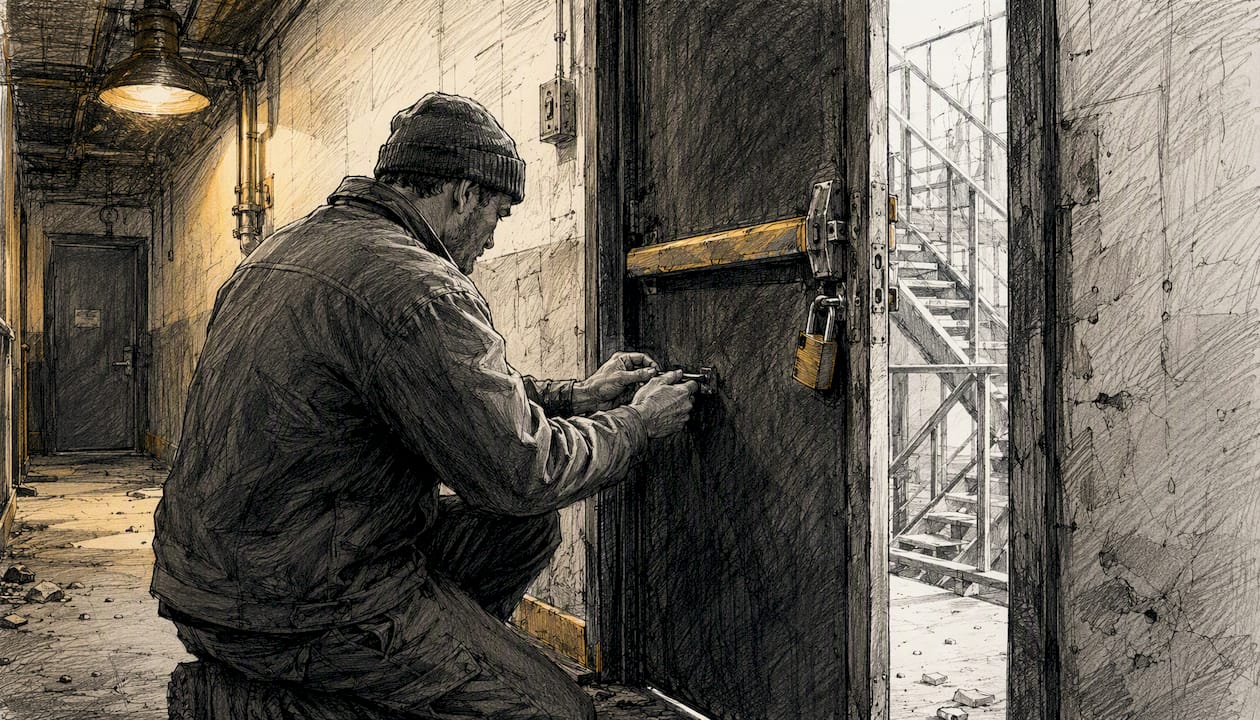
Rank your corrections this way. Life-safety systems come first: egress obstructions, self-closing door failures, and missing detectors. After a deadly Inwood fire, inspectors found padlocks on doors leading to fire-escape exits and debris blocking rear courtyard access — both cited as violations. A landlord at an adjoining property had open citations for obstructed egress, missing detectors, and broken self-closing doors before the blaze. These are not paperwork problems; they are the conditions that kill people and trigger criminal charges.
Second tier: sprinkler and alarm system defects. Impaired suppression systems require an immediate fire watch under the Fire Code. Third: administrative lapses — expired permits, missing Certificates of Fitness, and overdue inspection or testing cycles. These draw summonses and fines but rarely Vacate Orders on their own.
Unresolved or repeat violations can enroll a property in alternate enforcement programs, which increase inspection frequency and escalate penalties rapidly.
Misconceptions building owners get wrong about FDNY violations
The fix alone closes the violation. It does not. The physical correction and the paperwork are both required. Submitting a Certificate of Correction with dated photos, invoices, and test reports is what actually closes the record.
Old buildings are exempt from current code. They are not. Under the NYC Fire Code, amended by Local Law No. 47 of 2022, owners of existing buildings must comply with the 2014 Fire Code's operational and maintenance requirements. Construction date is irrelevant to operational obligations.
A tenant caused it, so the owner isn't liable. FDNY holds the building owner responsible regardless of who created the condition. Tenant storage blocking a stairwell is the owner's violation to correct.
Self-certifying a fire alarm correction is straightforward. FDNY rules specify exactly who may certify corrected fire alarm defects and impose serious penalties for false or fraudulent certification. Only a licensed professional with the correct credentials may sign off.
How to train building staff to prevent FDNY violations
The violations that recur most often — propped doors, blocked egress, cluttered mechanical rooms — are almost always behavioral, not structural. A one-time repair without staff training produces the same citation six months later.
Run a brief monthly walkthrough with your super and any building staff. Cover three things: keep self-closing doors latched and never propped, keep stairwells and fire escapes clear of any stored items, and report any alarm or sprinkler anomaly immediately rather than silencing and ignoring it. Post laminated egress maps and exit sign locations in common areas so staff can identify and flag problems before an inspector does.
For buildings with fire alarm panels, make sure at least one staff member knows how to read a trouble or supervisory signal and who to call. Deferred alarm response is one of the fastest paths to an unwarranted alarm citation and a fine.
Document every walkthrough with a dated log. A consistent maintenance record limits penalties and demonstrates good faith at an OATH hearing.
What fire code baseline applies to your NYC building?
The NYC Fire Code, as amended by Local Law No. 47 of 2022 (effective April 15, 2022), is the governing law for fire prevention, emergency preparedness, and maintenance of fire protection systems citywide. Existing buildings must meet the 2014 Fire Code's operational and maintenance requirements — not just the code in effect when the building was constructed.
The FDNY Fire Code Guide spells out practical obligations: maintaining 18 inches of clearance below sprinkler heads, prohibiting certain storage types, and keeping egress paths unobstructed at all times. When strict compliance is genuinely impracticable — say, a structural column that limits sprinkler clearance — the Fire Code provides a formal modification process. That process requires documentation and FDNY approval; it is not a self-declared exemption.
Documentation and certification requirements
Every correction needs a paper trail. For physical repairs, that means dated photos before and after, a signed contractor invoice specifying the work completed, and any applicable test report. For fire alarm defects, certification must come from a licensed professional with the credentials the FDNY specifies — not just any electrician or alarm technician.
False or fraudulent certification carries disqualification and criminal exposure under FDNY rules. The risk is not theoretical; the FDNY audits certifications and cross-references them against inspection records. Submit only what is accurate and complete.
Certificates of Fitness — required for fire safety directors, citywide sprinkler system maintenance, and other regulated roles — must be current and held by the individual performing the function. An expired COF is its own violation, separate from any underlying system defect.
How long does it take to resolve an FDNY violation?
Simple physical corrections with clean documentation can close in two to three weeks: fix the condition, gather the paperwork, submit the Certificate of Correction, and request re-inspection. The FDNY's standard window is 35 days from issuance; missing that deadline typically triggers an OATH hearing.
Complex violations — impaired sprinkler systems, fire alarm panel replacements, or conditions requiring licensed design work — routinely take 60–90 days when permits and inspections are involved. Administrative violations like expired permits or missed testing cycles can resolve faster if the underlying service is scheduled promptly.
Timely correction and thorough documentation commonly resolve violations without a hearing. Acting within the first two weeks of receiving a notice gives you the most room to gather documentation, schedule contractors, and still meet the 35-day deadline.
What field experience shows about why violations keep recurring
Routine, low-cost maintenance prevents most common FDNY violations. Keeping self-closing doors functional, securing egress paths, replacing dead detector batteries, and clearing 18 inches below sprinkler heads costs almost nothing compared to a fine, a lawsuit, or a Vacate Order.
The failure patterns are consistent. Tenants stack furniture and boxes in stairwells. Supers prop corridor doors open for convenience. Alarm and sprinkler testing gets deferred because scheduling a contractor feels like a hassle. Permits expire because no one tracked the renewal date. None of these are engineering failures — they are administrative and behavioral ones.
Enforcement escalates faster than most owners expect. Open violations related to self-closing doors, egress obstruction, and alarm or sprinkler maintenance appear in civil litigation as evidence of negligence. Repeat citations can trigger alternate enforcement programs that increase inspection frequency and compound fines.
When conditions involve impaired life-safety systems — a sprinkler system out of service, a fire alarm panel in trouble, a standpipe defect — a licensed professional is not optional. Certification requirements, permit filings, and FDNY coordination require a licensed PE or the appropriate company certificate. Attempting self-certification on a fire alarm defect, for example, carries the penalties described in FDNY rules: disqualification and potential criminal liability.
Bazini Engineering is a licensed PE firm with MEP and fire protection scope. The firm handles the work that requires a stamp, a permit, or FDNY coordination — not just the paperwork, but the field verification behind it.
Bazini Engineering closes FDNY violations efficiently
When a violation involves a fire protection system, a permit, or a certification requirement, the correction needs more than a handyman.

Baziniengineering provides fire suppression design and remediation, fire alarm troubleshooting and certification support, permit expediting, and FDNY coordination for NYC building owners. The firm delivers a prioritized correction plan, contractor scopes, signed certifications where required, and a complete documentation packet to submit for your Certificate of Correction. When an OATH hearing is unavoidable, Baziniengineering can support representation with the technical documentation the hearing officer needs.
Request a compliance review through Baziniengineering's services page and get a clear picture of what needs to be corrected, in what order, and who needs to sign off.